Skip to content

The best replacement power adapters for 2026

Several smaller devices in this network — humidifiers, air quality monitors, some tower fans — run on an external power brick rather than a direct mains cable, and that brick is a common failure point long before the appliance itself gives out. Getting a replacement right is entirely about matching voltage, current rating and connector polarity exactly: an adapter that physically fits but supplies the wrong voltage can damage the appliance it is meant to revive. We compare stated electrical specifications against common models in this network, connector type and size, and polarity, which is marked on the original adapter's label and easy to overlook when ordering a replacement from a photo alone.

What we recommend

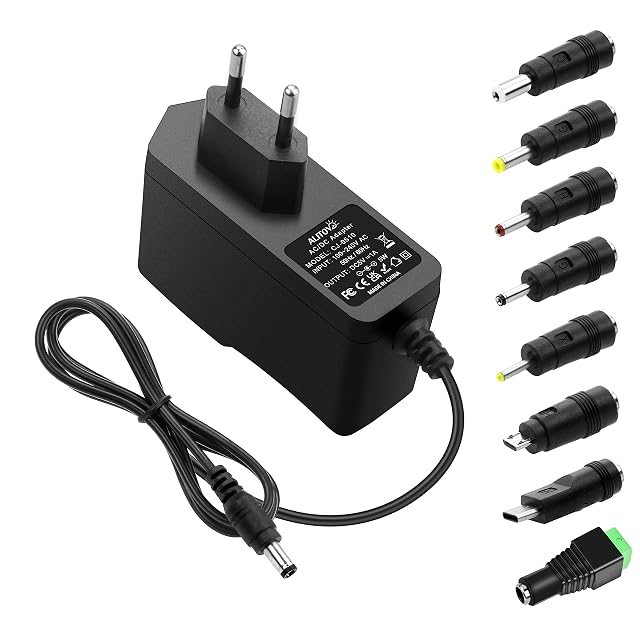
  1. ALITOVE universal 5V 1A power adapter with 8 interchangeable connector tips

    ALITOVE Universal 5V 1A Power Adapter (8-Tip)

    A generic 5V DC power adapter rated up to 1A (5W), sold with 8 interchangeable connector tips to match different barrel-plug sizes. This is a universal-fit accessory, not one built for a specific reviewed model — the voltage, current and polarity printed on your original adapter's label are what actually determine a safe match, not the appliance's brand or size. Confirmed with a single live offer on Amazon.de; we did not find a listing on the other three markets we checked.

    Output
    5V DC, up to 1A (5W)
    Connector
    8 interchangeable barrel-plug tips included
    Fit type
    Generic / universal — voltage and polarity match required
    Input
    100-240V AC, per the listing
    • Confirmed with a live offer on Amazon.de
    • 8 interchangeable tips cover several common barrel-plug sizes without buying multiple adapters
    • 5V/1A only — not a fit for any appliance in this network needing a higher voltage or current, which must be checked on the original adapter's label first

    Best for: A small, low-power device — most commonly an air-quality monitor or a small humidifier accessory in this network — that specifically takes 5V/1A and whose original adapter has failed, confirmed against the original's printed label first.

    ≈ 11 €
    Check price on Amazon

Who each type suits

Measuring device
Monitors and hygrometers often run off a low-voltage adapter. A lost adapter stops a continuous measurement.
Fan or compact purifier
Many small air-treatment appliances use an external adapter rather than a built-in supply.
Damaged cable
The adapter's cable outlet is the point that breaks from repeated bending. An exposed conductor is replaced, not repaired.

The trade-offs to weigh

Exactness against availability
Voltage, current, polarity and plug diameter must all match. Finding all four in a generic takes some hunting.
Dedicated adapter against USB power
A USB-powered device can be sorted out anywhere; a proprietary adapter is only replaced by an exact equivalent.
Price against compliance
An adapter permanently plugged into the mains must carry a compliance marking. Not a place to save money.

Questions buyers ask

Which parameters must match?

Identical voltage, current at least equal, identical polarity and plug diameter. All four, without exception.

Is a higher current risky?

No: the device only draws what it needs. It is insufficient current that makes the adapter heat up.

Where do I read the specifications?

On the old adapter, or near the device's power socket. The values are printed there in small characters.

What happens with the wrong voltage?

A higher voltage can destroy the electronics immediately. A lower one simply prevents operation.

The adapter is warm — is that normal?

Slight warmth yes; significant heat signals an undersized or ageing adapter. It should be replaced.

Can a damaged cable be repaired?

An exposed conductor plugged into the mains is a real risk. The adapter is replaced whole.

Should the adapter be unplugged when not in use?

On a seasonal appliance stored for months, yes. The no-load consumption is small and the ageing continues.

What to remember

Voltage, current, polarity and plug diameter: all four must match, without exception. A higher current poses no problem — it is an insufficient one that makes it heat up — and a bared cable is replaced whole, never repaired.