Measure the window before the machine arrives
Every portable AC ships with a window kit built for a specific range of widths, and most are designed around a sliding sash window. Measure the actual opening — width, height, and how it opens — before assuming the included kit fits. A tilt-and-turn or casement window, common across continental Europe, often needs a different seal.
Route the hose with the fewest bends possible
A crushed or sharply bent hose restricts airflow, and the compressor responds by working harder for less cooling. Plan the shortest, straightest path from the unit to the window kit, and support any unavoidable bend rather than letting it rest under its own weight.
Decide on drainage before switching it on
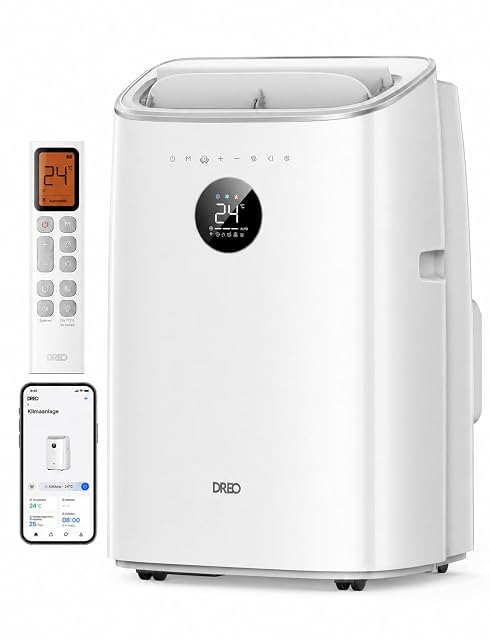
Some units, like the Dreo AC318S, describe an automatic evaporation system rated to a stated humidity ceiling. Others rely on a tank that needs periodic emptying. Check which your unit does — and if it’s tank-based, decide where it will sit so emptying it isn’t a chore that gets skipped.
Run it once before judging it
Room temperature takes time to drop, especially in a room that started warm. Give a new installation at least thirty minutes at a stable setting before deciding whether the unit is underperforming — a fresh setup with a slightly imperfect seal will look worse in the first few minutes than it does once the room stabilizes.
What we would not do
Assume a bigger BTU rating fixes a bad installation. A well-sealed, well-routed 7,000 BTU unit will often outperform a poorly installed 16,000 BTU one in the room that actually matters — the one it’s sitting in.
The questions that keep coming up
Does the window kit really matter that much?
Yes. A single-hose unit pulls replacement air from everywhere else in the flat to make up for what it exhausts outside — cracks around a badly sealed hose included. A poorly fitted kit lets warm air straight back in, undoing a real share of the machine's rated cooling.
How long does the hose need to be?
As short and as straight as the room allows. Every bend restricts airflow the same way a pinched straw does, and a long, looping run to reach a distant window is a common, avoidable source of reduced performance.
Last reviewed 24 August 2026