Skip to content

Bosch Dry 4000 vs Philips HU2716/10

Is the air in the room too wet, or too dry?

These do opposite jobs, and buying the wrong one for a given room's actual problem is a real, avoidable mistake — condensation on the windows calls for one of these, dry skin and static in winter calls for the other.

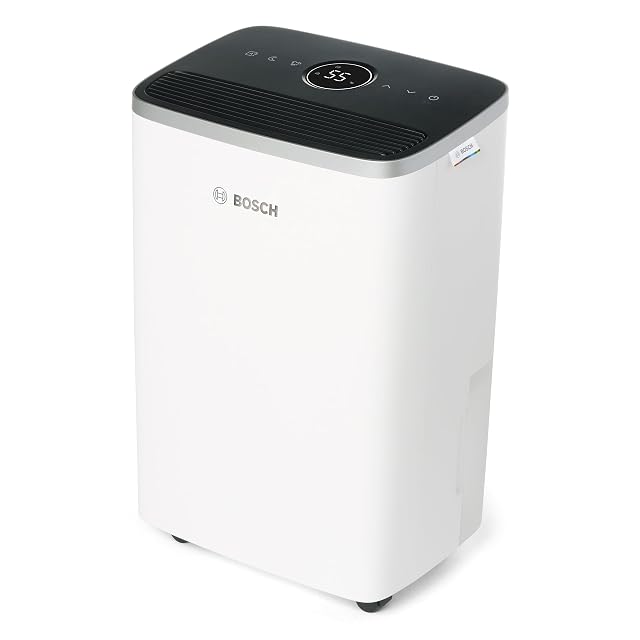
Bosch Dry 4000 dehumidifier with half-transparent 2.5 liter tank and integrated handle

Bosch Dry 4000

8.3/10

Wins 1 of 8

Check price

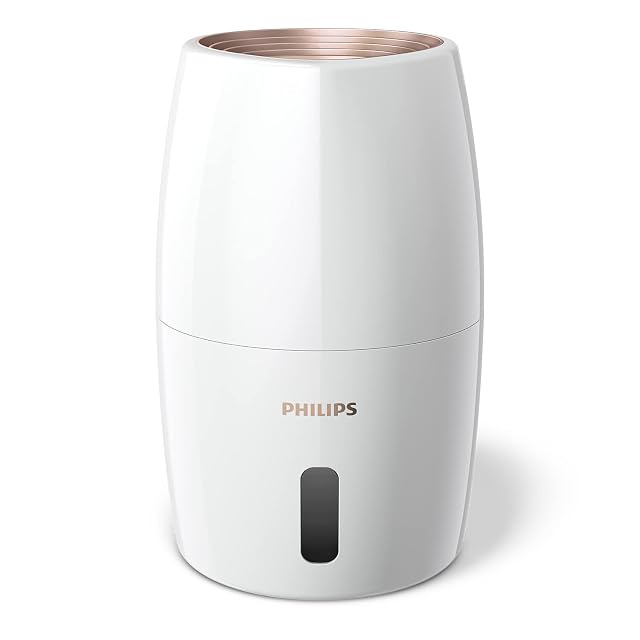
Philips HU2716/10 evaporative humidifier with NanoCloud wick technology

Philips HU2716/10

7.5/10

Wins 3 of 8

Search Amazon

Row by row

Compared on Dry 4000 HU2716/10
Function Removes moisture from the air Adds moisture to the air
Rated rate 16 L extracted / 24h up to 200 ml added / hour
Room coverage (manufacturer) up to 33 m (108 ft)² up to 32 m (105 ft)²
Tank capacity 2.5 L 2 L, removable
Noise 38 dB 33 dB
Control modes Auto, Night, Laundry 3 levels + sensor-driven auto + sleep mode
Continuous drain / refill needed Tank only, no continuous drain published 2 L tank, up to 15h runtime
Price ≈ 224 € ≈ 90 €
Listed on amazon.com Yes No

A tick marks the better answer on that line only. Counting ticks does not decide the page — the two verdicts below do, because these products answer different questions.

Who should take which

Buy the Dry 4000

Take the Bosch when the actual problem is excess humidity — condensation, a musty smell, visible damp. Running a humidifier in that room would make the problem worse, not better.

HU2716/10

No amazon.com listing was found for this one. We hold references for other markets but none for the United States, so it may not be buyable here — which is the first thing to weigh against anything below.

Take the Philips when the air is genuinely too dry — a heated room in winter, static shocks, dry skin or a scratchy throat on waking. Running a dehumidifier there addresses nothing, since there's no excess moisture to remove.

The questions that keep coming up

How do I know which problem I actually have?

A thermo-hygrometer — a small standalone humidity sensor — is the cheapest way to find out rather than guessing. Most homes sit comfortably between roughly 40% and 60% relative humidity; readings well above or below that range point toward one appliance or the other.

Could a room need both at different times of year?

Yes, and it's common — a room can run damp in winter from condensation and dry out once central heating runs continuously. The two appliances address opposite problems, so a household that experiences both may reasonably own one of each rather than expect one machine to do both jobs.

Each one in full

  • Bosch Dry 4000

    16 L/24h · 2.5 L tank · 3 automated modes

    A compressor dehumidifier from Bosch rated at 16 liters removed per 24 hours for rooms up to 33 m (108 ft)², with a half-transparent 2.5 L tank, three automated modes (Auto, Night, Laundry) called 'Easy Dry Select,' a stated 38 dB noise level, an integrated handle and castors. Bosch does not publish WiFi or app control for this model.

    Best for: Buyers who want a known appliance brand and simple mode-based control rather than a numeric humidity dial, and who don't need app control or continuous drainage.

    8.3/10

  • Philips HU2716/10

    200 ml/h NanoCloud evaporative · 2 L tank · 33 dB

    Philips' Series 2000 evaporative humidifier uses NanoCloud technology — a wick-based natural-evaporation process rather than an ultrasonic disc — rated at 200 ml/h from a 2 L tank, covering up to 32 m (105 ft)², at a stated 33 dB. Philips publishes 3 humidity levels plus a sensor-driven auto mode and a sleep mode, and states the evaporative process does not disperse the mineral dust associated with ultrasonic humidifiers.

    Best for: A household in a hard-water area, or anyone who wants to avoid ultrasonic mineral dust specifically, and is willing to pay more and refill more often for that.

    7.5/10

Prices quoted in these summaries are dated readings. The live price is shown next to each product.