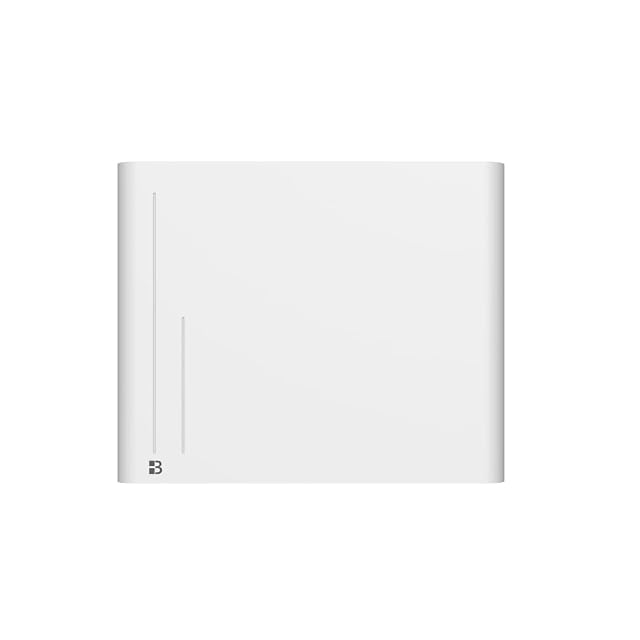
Where this leaves you A mica panel at 1,500 watts with anti-freeze at 41 °F and two settings, genuinely fanless so it does not stir dust. It also sells 100 per cent electrical efficiency as a feature, which every heater on this shelf shares.
What the maker puts in writing
1,500 W mica panel
2 settings with an adjustable thermostat
Does not stir up dust, pollen or dander
Standby anti-freeze below 41 °F
Thermal shut-off, tip-over switch · freestanding or wall mounted
Fanless, and why that is the point
Three heaters on this shelf have no fan. A mica panel is the warmest-running of them, because it radiates from a large surface rather than relying on air drifting past a coil.
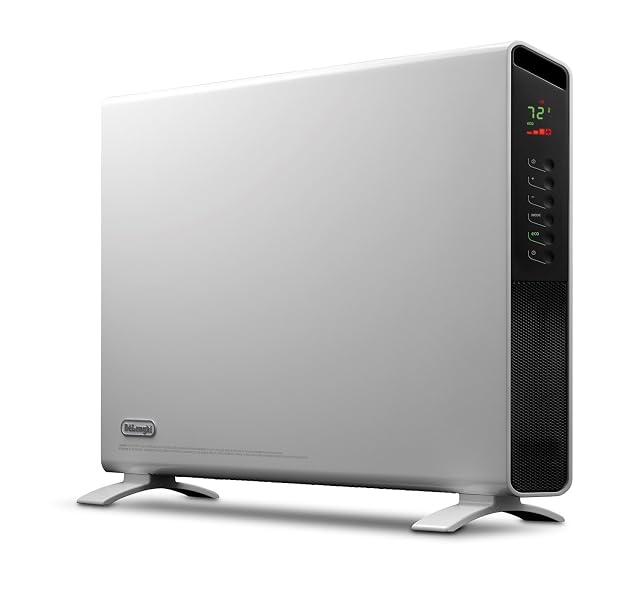
For anyone whose complaint about heaters is a dry throat or a dusty room, that is the specification — and it is the opposite choice from the fan-assisted De’Longhi convector on this same shelf.
The efficiency sentence, again
Every electric heater on this shelf turns all its electricity into heat. The 250-watt panel does it, the 1,500-watt convector does it, and so does this.
What differs is how much electricity, how the heat is delivered, and what it costs to run — and on this listing only the first of those three is published.
Availability
Read on the day this page was built: $130 at the American Amazon shop.
Read from Keepa on the day this page was last revised; stock and price both move without notice.
Prices quoted in this text were read on 2026-10-04. The live price is at the top of the page.
Where this one sits on its shelf
At $130, it is the 2 cheapest of the 8 models in this category published here.
Lowest price on the shelf$56
Median$180
Highest price on the shelf$250
The good and the less good
Strengths
A mica panel, which radiates rather than blows — the listing ties that directly to not stirring dust, pollen or dander
Anti-freeze standby below 41 °F, shared with one other heater on this shelf and useful in an empty house
Freestanding or wall mounted with the kit in the box, and a carry handle
Compromises
Two settings and an unspecified thermostat, where a heater at a similar price on this shelf adjusts in two-degree steps from 59 to 95 °F
No room size, no warranty and no amperage
Its efficiency bullet claims something true of every electric heater on this shelf
Specifications
Power
1,500 W
Element
Mica panel
Settings
2, with an adjustable thermostat
Dust
Stated not to stir up dust, pollen or dander
Anti-freeze
Standby setting turns the heater on below 41 °F
Safety
Thermal shut-off; internal tip-over switch
Mounting
Freestanding or wall mounted with the included kit
Portability
Carry handle
Room size
Stated as medium and large; no figure given
Warranty
Not stated by the maker
Amazon reference
B005MMN75G
EAN
0043902499466
The questions that keep coming up
What is a mica panel?
A heating element layered with mica, which radiates heat from a large flat surface instead of pushing air across a coil. The practical effect is the one the listing names: no fan, so no dust moved and no noise. The De’Longhi convector on this same shelf does have fans.
Is the efficiency claim meaningful?
No. *Converts 100% of the electricity used into heat* is true of every resistance heater, including the 250-watt panel at a third of this price. It is accurate and it does not separate this heater from anything else here.
How precisely can I set the temperature?
Two settings and an adjustable thermostat, with no range and no increment published. The Embilis on this shelf publishes 59 to 95 °F in two-degree steps for a similar price.
Set beside the neighboring home comfort appliances
home comfort appliances from the same category, at nearby prices. Only what all of them publish is shown: a column with holes compares nothing.
Where the models are not equal, in home comfort appliances
If price decides: this model, at $130.
Highest Power in the table: Embilis HD22R (1,500 W, with Low and High modes).
Who this one is for, among home comfort appliances
A bedroom where blown air is the problem — dust, pollen, a dry throat — and silence matters
Price and availability, for home comfort appliances
Details checked on October 4, 2026.
What buyers actually choose
Amazon reports what buyers took in the month before this page was last checked: at least 100.
The figure is a floor, rounded by Amazon, and read through Keepa — it says what buyers picked, not what a maker claims.
Sources
Specifications: the manufacturer sheet for home climate appliances and the matching Amazon product page. Prices and availability: Keepa. Every figure on this page names its source.
A wall-mounted 1,000 W electric radiator built around a ceramic dry-inertia core — Bestherm states it keeps diffusing stored heat after the element switches off, unlike a plain convector. Programming runs through a touch LCD screen with 3 pre-loaded weekly programs plus 1 custom program, and the unit supports France's 6-order Fil Pilote wired protocol. Bestherm also states a window-open detector, child lock, overheat protection, and a 2-year warranty with France-based support.
Best for: A single room around 10 m (33 ft)² where scheduled inertia heat is worth the step up from a plain convector — especially if your home already has French Fil Pilote wiring to plug it into.
2,000 W · 3 heat settings · natural convection, no fan
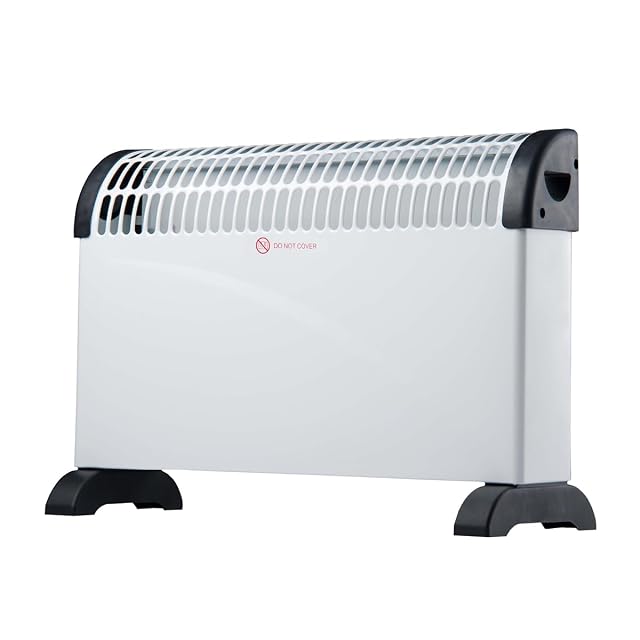
A basic 2,000 W electric convector with three heat settings — 750 W, 1,250 W, and a 2,000 W 'Turbo' stage — controlled by an adjustable thermostat dial. Alpina describes pure natural convection with no fan, rates it for rooms up to 15 m (49 ft)², and states overheat protection. It's the cheapest heater in this family, but one of the four markets we checked shows a data problem worth knowing about before you buy.
Best for: The cheapest way into this family — a small room, workshop, or occasional-use space where basic convection heat at low upfront cost matters more than programming or thermal inertia.