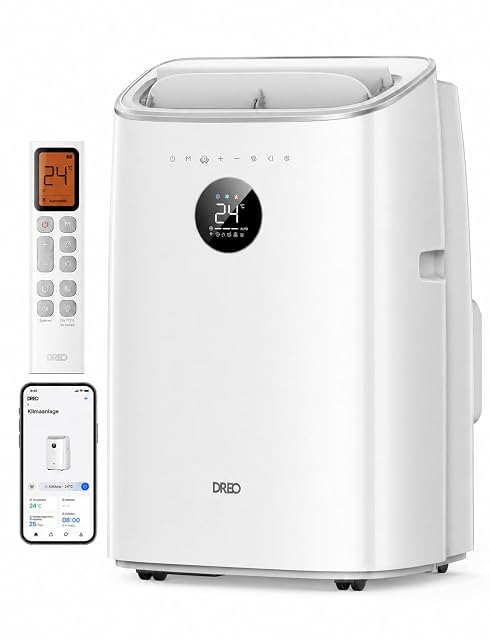
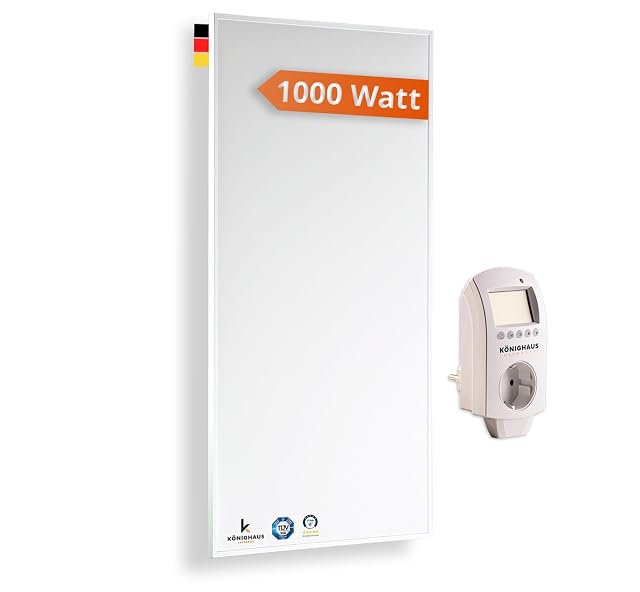
Measure cable reach before assuming placement
Most appliance cables run one to one and a half meters. A unit meant to sit in the center of a room, away from any wall socket, may simply not reach — check the stated cable length against your actual room layout before assuming a specific placement will work.
Wall-mounted heaters need a nearby, rated socket
Wall-mounted infrared panels like the Könighaus P-Serie need a socket within reach of a fixed installation point, and running a heater’s load through a long extension lead is a real safety concern rather than a minor inconvenience.
Know what else is on the circuit
A portable AC or a heater can draw a substantial share of a standard circuit’s capacity on its own. Adding another high-draw appliance to the same circuit risks tripping a breaker — spread heavy loads across circuits where possible, especially in an older property.
Window kits and cable routing can conflict
A portable AC’s exhaust hose and its power cable often need to reach the same general area — a window on one side of a room and the nearest socket on the other can force an awkward compromise. Plan both before finalizing where the unit will actually sit.
What we would not do
Rely on a long chain of extension leads to reach a socket for a high-draw appliance. If the room’s layout genuinely doesn’t support safe cable routing to a heater, air conditioner or similar appliance, that’s a reason to reconsider placement — or consult an electrician about adding a socket — rather than work around it with unrated cabling.
The questions that keep coming up
Is it safe to use an extension lead with a heater or air conditioner?
Generally best avoided unless the extension lead is rated for the appliance's full load — heaters and air conditioners draw meaningfully more current than most household extension leads are built for, and an undersized lead is a genuine fire risk.
Can I run a heater and another high-draw appliance on the same circuit?
Check the circuit's total rated capacity against the combined draw. Running a 2000 W heater alongside another high-power appliance on the same circuit can trip a breaker or, in an older installation, overload wiring not designed for that combined load.
Last reviewed 24 August 2026