Skip to content

A whole-home comfort strategy, not one appliance per problem

Most homes don't have one comfort problem — they have several, in different rooms, at different times of year, and treating them as one shopping list rather than a series of panic purchases saves real money.

Measure before you buy anything

A monitor like the Airthings View Plus, or a handful of cheap standalone thermo-hygrometers placed in different rooms, tells you where humidity, CO2 or temperature problems actually are — often not where they seem to be from how a room “feels.”

Match the appliance to the room, not the house

A bathroom’s humidity problem, a bedroom’s overnight temperature, and a living room’s air quality are three different jobs. Buying one appliance per genuine problem, sized for that specific room, usually beats one oversized unit trying to cover everything.

Sequence purchases by season

A dehumidifier matters most as heating season starts and condensation risk rises; a fan or evaporative cooler matters in summer. Spreading purchases across the year, rather than buying everything at once under pressure, often means better-considered choices and better prices.

Reuse infrastructure where you can

A single air quality monitor can inform decisions about purifiers, humidifiers and ventilation across several rooms if moved between them periodically, rather than needing one permanently installed monitor per room from day one.

What we would not do

Buy reactively, room by room, as each one becomes uncomfortable enough to complain about. A short period of measurement and planning across the whole home, before any purchase, generally leads to fewer, better-matched appliances than a series of one-off panic buys.

The questions that keep coming up

Should I buy one powerful appliance for the whole home, or several smaller ones?

In most cases, several smaller, room-appropriate appliances outperform one oversized unit expected to cover an entire home — airflow, humidity and temperature all vary meaningfully by room, and a single central unit struggles to address that variation.

Where should I start if I'm addressing comfort for the first time?

With measurement, not a purchase. A whole-home air quality monitor or a few cheap thermo-hygrometers placed around the house tell you which rooms actually have a problem, and what kind, before you spend on a fix for the wrong one.

Last reviewed 24 August 2026
What you need to have already

Everything above works with what you already own. These are the products we would reach for, and each links to the full review rather than straight to a shop.

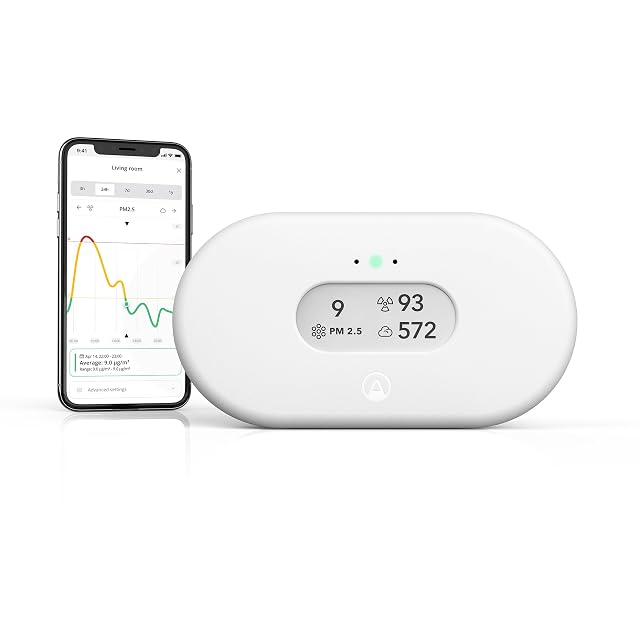
  • Airthings View Plus

    7 sensors incl. radon & CO2 · Wi-Fi + app · battery powered

    A seven-sensor Wi-Fi monitor covering radon, PM2.5, CO2, VOCs, humidity, temperature and air pressure, read through the Airthings app. Radon is sampled with a passive diffusion chamber and alpha-spectrometry detection; the unit runs on AA batteries or USB and can act as a hub for other Airthings devices.

    Best for: Whole-home air monitoring where someone wants radon and VOC coverage alongside CO2 and particulates, and is comfortable running everything through the Airthings app.

    8.0/10

    ≈ $330

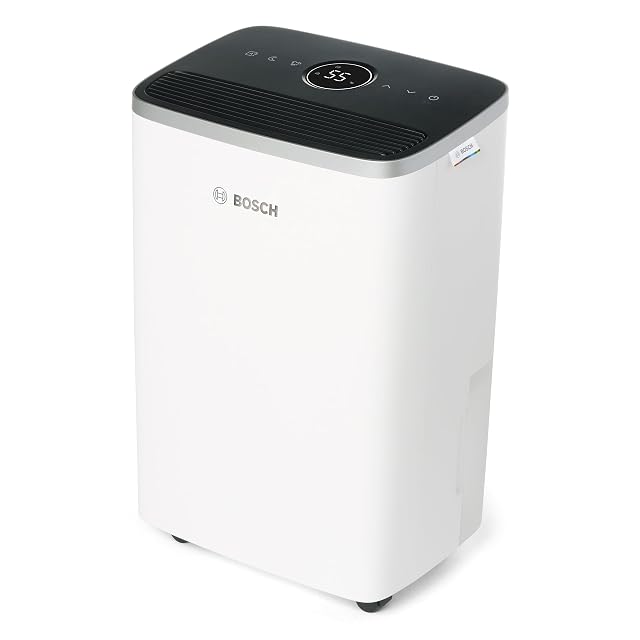
  • Bosch Dry 4000

    16 L/24h · 2.5 L tank · 3 automated modes

    A compressor dehumidifier from Bosch rated at 16 liters removed per 24 hours for rooms up to 33 m (108 ft)², with a half-transparent 2.5 L tank, three automated modes (Auto, Night, Laundry) called 'Easy Dry Select,' a stated 38 dB noise level, an integrated handle and castors. Bosch does not publish WiFi or app control for this model.

    Best for: Buyers who want a known appliance brand and simple mode-based control rather than a numeric humidity dial, and who don't need app control or continuous drainage.

    8.3/10

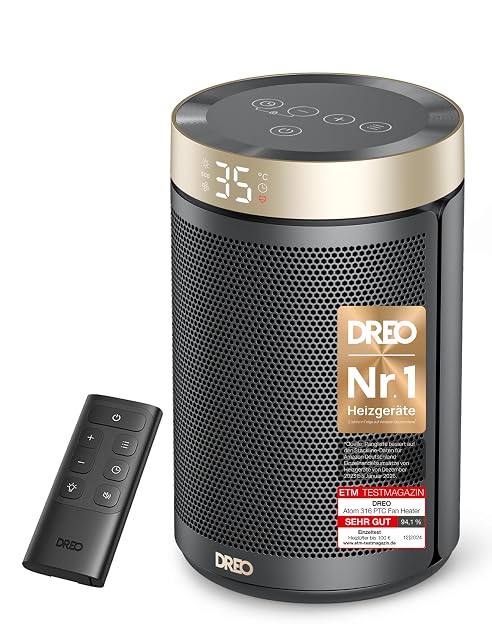
  • Dreo DR-HSH006

    1,500 W PTC ceramic · 5–35 °C (41 to 95 °F) in ±1 °C steps · tip-over sensor

    A 1,500 W PTC ceramic heater — Dreo's 'Hyperamics' system — with a thermostat adjustable from 5 to 35 °C (41 to 95 °F) in 1 °C steps, a tilt-detection tip-over sensor, overheat protection, and V0 flame-retardant housing. Dreo states 34 dB of operating noise from its brushless DC motor, and units sold since 5 September 2025 include a remote control.

    Best for: A bedroom or home office where quiet running and a specific thermostat setpoint matter more than outright wattage.

    8.1/10