Where scale actually builds up
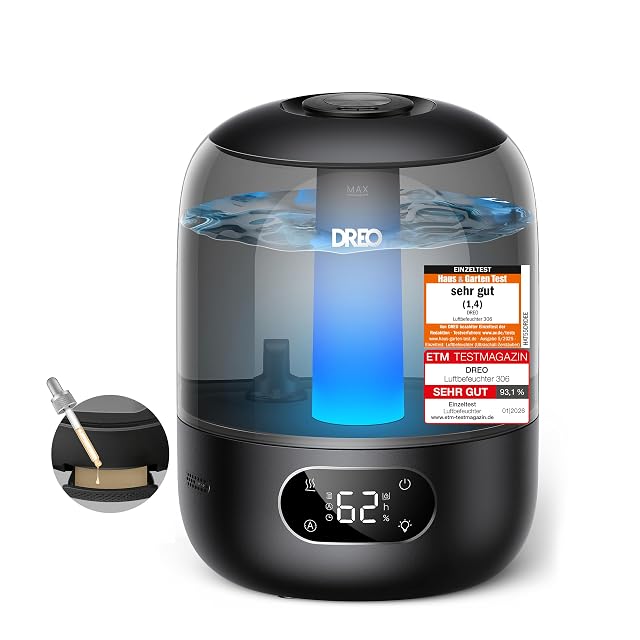
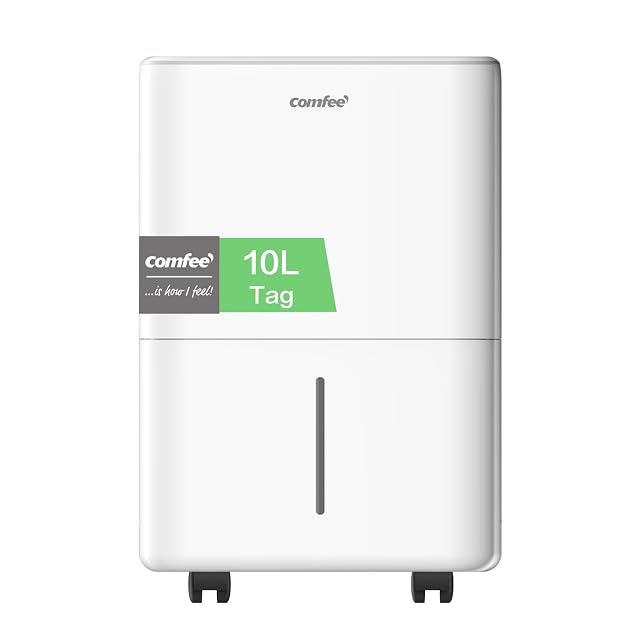
On an ultrasonic humidifier, scale forms on the small ceramic disc that vibrates water into mist — a scaled disc produces less mist for the same setting. On a dehumidifier, mineral deposits can build on internal surfaces the condensate passes over, though the tank itself is the part most people actually see and clean.
Signs it’s overdue
Reduced mist output on a humidifier at the same setting that used to produce more, or a fine white crust visible on the tank or disc, both point to scale buildup. On a dehumidifier, a musty smell from the tank is a more common early sign than reduced extraction.
A basic routine that covers most cases
Empty and rinse the tank between fills rather than topping up indefinitely. For a deeper clean, a diluted descaling solution — check your manual for what’s approved — left to sit briefly in the tank or reservoir, then rinsed thoroughly, handles most mineral buildup before it becomes visible.
Descaling cartridges do some of this automatically
Some humidifiers accept a separate descaling cartridge fitted between tank and reservoir, which reduces how much mineral content reaches the mechanism in the first place. Where your local water is genuinely hard, this is often less hassle than manual descaling on a frequent schedule.
What we would not do
Ignore a gradual drop in output and assume the appliance is simply wearing out. In most cases here, reduced performance from an otherwise-working humidifier or dehumidifier traces back to scale or a dirty filter — genuinely worn-out units are less common than under-maintained ones.
The questions that keep coming up
How often should I descale?
It depends heavily on local water hardness and how many hours a day the appliance runs — manufacturers typically give a range rather than a fixed number for exactly that reason. In a hard-water area, checking monthly is a reasonable starting habit.
Can I use vinegar to descale?
Many manufacturers permit a diluted white vinegar solution for descaling, but check your specific model's manual first — some parts or coatings may not tolerate it. Where the manufacturer publishes a specific descaling product or method, follow that over a generic household approach.
Last reviewed 24 August 2026