Skip to content

The best humidifier for 2026

Mist output in milliliters per hour is the headline figure, but the real fork in this family is technology: ultrasonic humidifiers are quieter and cheaper but can leave white mineral dust with hard water; evaporative models avoid that at the cost of a smaller tank and a higher price.

The smallest tank, the lowest price

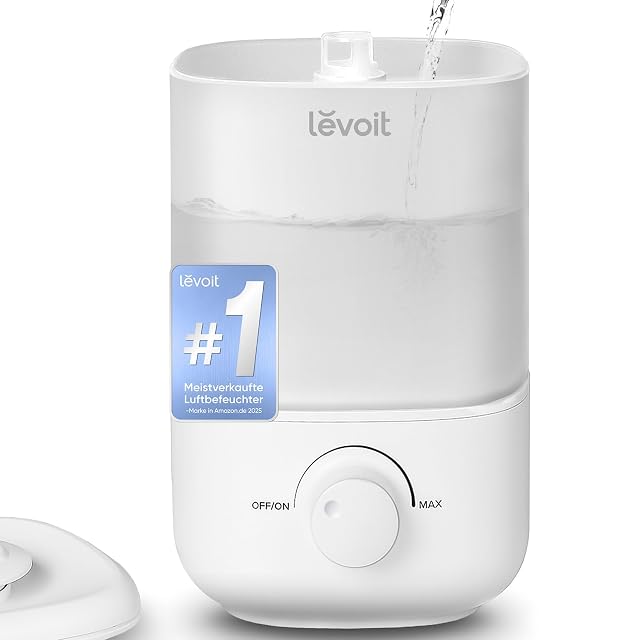
The Levoit Classic 160 is first for a compact bedroom humidifier at the lowest price in this family, with a 2.5 L tank and a stated 23 dB noise figure.

A bigger tank, an aroma tray, and a longer runtime

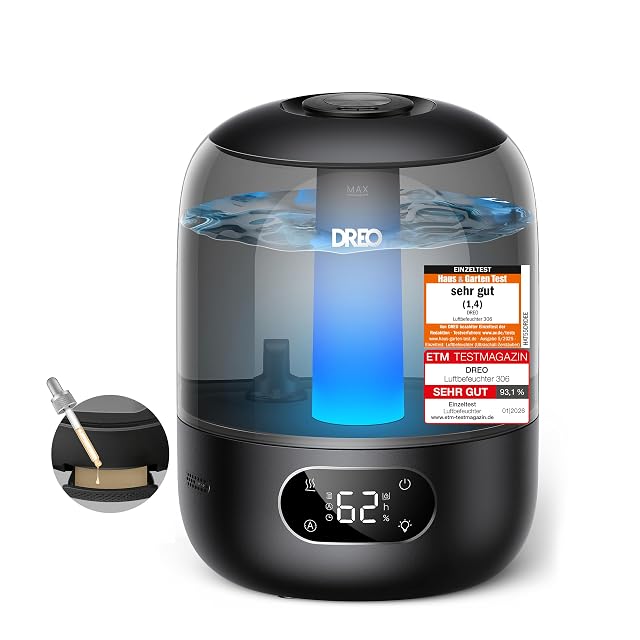
The Dreo DR-HHM006 steps up to a 3 L top-fill tank rated for up to 30 hours on one fill in sleep mode, plus a separate aroma-pad tray for essential oils kept apart from the water tank itself.

No mineral dust, at a real cost in tank size

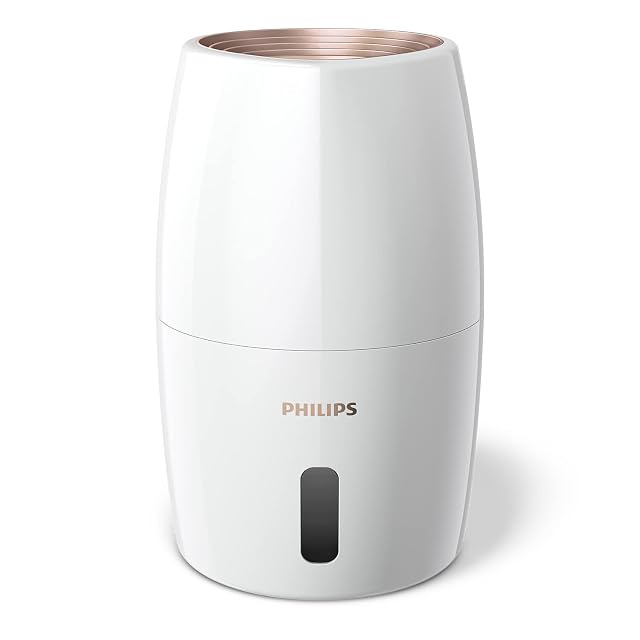
The Philips HU2716/10 is the pick specifically for hard-water areas: its NanoCloud evaporative technology draws air through a moistened wick rather than vibrating water into mist, which Philips states avoids the white dust ultrasonic humidifiers can leave. The trade is a smaller 2 L tank and the highest price of the three.

What we would not do

Choose an ultrasonic model for a hard-water home without a plan. Either budget for distilled water, or go evaporative — the Philips is the only one of these three built specifically to sidestep the issue rather than leave it for you to manage.

Which unit does your room need?

Your water is hard
An evaporative or warm-mist humidifier: ultrasonic models throw the minerals into the room as white dust.
It goes in a child's room
Cool mist removes the scald risk; warm mist kills more organisms in the tank. Both have a case, and the choice turns on which risk you prefer.
You want the quietest
Ultrasonic is the most discreet, at the price of cleaning and the limescale question.
You are treating a large room
Tank capacity and output matter, but a humidistat matters more: without one, you over-humidify.

Picking by the room you have

Bedroom in winter

The main use: offsetting the drying effect of heating. Noise and overnight runtime decide the model.

Office

Small volume, a full day. A compact unit with automatic shut-off on an empty tank is enough.

Room with instruments or old timber

Stable humidity matters more than output. An accurate humidistat becomes the real criterion.

Nursery

Safety and hygiene come first: easy cleaning, automatic shut-off, and watching the actual level rather than the setting.

What is worth looking at, and what is not

Technology and limescale
Ultrasonic nebulizes the water as it is, minerals included; evaporative and warm mist leave them in the appliance. It is the criterion that really decides, before output.
The humidistat
With no setpoint you humidify until the windows run with condensation. Even an approximate humidistat prevents the excess that damages a home.
Ease of cleaning
A wide-mouthed tank can be washed; a narrow-necked one cannot, not really. That is what decides the appliance's actual hygiene.
Noise and light
In a bedroom, a gurgle or a night light that cannot be turned off is enough to send the appliance to the cupboard.

Matching the figure to the room

Your constraintThe technologyWhat it imposes
Very hard waterEvaporative or warm mistA little more noise or consumption
Bedroom, quietUltrasonicSuitable water and frequent cleaning
Maximum hygieneWarm mistA hot surface and higher consumption
Large roomOutput and humidistatA tank to refill often

Where buyers go wrong

Humidifying without measuring
Too much humidity creates condensation on cold surfaces and, in time, mold. A hygrometer costing a few pounds stops a remedy becoming a problem.
Leaving water in the tank for days
A warm, still tank is a culture medium, and the appliance disperses what it holds. Water is changed on every day of use.
Using tap water in an ultrasonic unit in a hard-water area
The white dust settling on furniture is your water's mineral, thrown into the room. It also ends up in the air you breathe.
Putting essential oils in a tank not designed for them
They attack plastics and foul the transducer. Models designed for it have a separate compartment, and that is the only place they belong.

By the household you are in

The adult bedroom
A quiet ultrasonic unit with a humidistat, suitable water and regular cleaning.
The child's room
A model easy to strip and wash, with automatic shut-off, watching the level rather than the dial.
The hard-water home
An evaporative unit, which keeps the limescale in its wick instead of dispersing it.

Filters, servicing and working life

A humidifier is an appliance that disperses what it contains: cleaning is not a comfort but a condition of use. Scale cuts the output, biofilm develops quickly, and none of it is visible from outside.

  • Empty, rinse and dry the tank on every day of use.
  • Descale the transducer or the wick as instructed and as your water demands.
  • Replace the wick on evaporative models when it hardens.
  • Dry it completely before end-of-season storage.

Safety

Two distinct risks: scalding on warm-mist models, and dispersal of whatever grows in a neglected tank.

  • Place a warm-mist unit out of reach of children and pets.
  • Never let water stand between uses.
  • Watch actual humidity with a hygrometer, to avoid condensation and mold.
  • Do not stand the appliance directly on timber furniture or fabric.

The picks, and the reasoning

  1. Levoit Classic 160

    2.5 L tank · 23 dB · up to 25 h runtime, lowest setting

    Levoit's entry-level ultrasonic humidifier, rated at 23 dB with a 2.5 L top-fill tank covering up to 20 m (66 ft)² and up to 25 hours of runtime on the lowest mist setting. Mist volume is controlled with a manual dial and a 360° nozzle; there is no humidity sensor, digital display, or auto mode published for this model.

    Best for: A small bedroom or a second humidifier for a child's room, where a low purchase price and simple manual control matter more than smart features.

    6.9/10

    ≈ $10

  2. Dreo DR-HHM006

    250 ml/h ultrasonic cool mist · 3 L top-fill tank · 26 dB sleep mode

    Dreo rates this ultrasonic cool-mist humidifier at 250 ml/h from a 3 L top-fill tank, with a 360° nozzle reaching up to 40 inches, a stated 26 dB in sleep mode, up to 30 hours of runtime, adjustable ambient light, and a separate aroma-pad tray for essential oils. Dreo's listing also names a built-in humidity sensor, though it does not describe a numeric auto-target mode tied to that sensor.

    Best for: A bedroom or nursery where a quiet overnight runtime and a large refillable tank matter more than app control or a numeric humidity display.

    8.1/10

    ≈ $40

  3. Philips HU2716/10

    200 ml/h NanoCloud evaporative · 2 L tank · 33 dB

    Philips' Series 2000 evaporative humidifier uses NanoCloud technology — a wick-based natural-evaporation process rather than an ultrasonic disc — rated at 200 ml/h from a 2 L tank, covering up to 32 m (105 ft)², at a stated 33 dB. Philips publishes 3 humidity levels plus a sensor-driven auto mode and a sleep mode, and states the evaporative process does not disperse the mineral dust associated with ultrasonic humidifiers.

    Best for: A household in a hard-water area, or anyone who wants to avoid ultrasonic mineral dust specifically, and is willing to pay more and refill more often for that.

    7.5/10

The questions that keep coming up

Will an ultrasonic humidifier leave white dust in my home?

Only with hard tap water. Both the Levoit Classic 160 and the Dreo DR-HHM006 use ultrasonic technology, which disperses whatever minerals are dissolved in the water you fill them with. Neither listing addresses water hardness or recommends distilled water.

Why is the Philips the most expensive despite the smallest tank?

It uses a different technology — an evaporative wick rather than an ultrasonic disc — which Philips states avoids the mineral-dust issue entirely. That's the trade you're paying for, not a bigger number on any other spec.

What humidity should I aim for?

A moderate level is enough for breathing comfort without causing condensation on the glass. The useful marker is not a number but the absence of misting on cold surfaces in the morning.

Do I need demineralized water?

On an ultrasonic unit in a hard-water area it removes the white dust and extends the machine's life. On an evaporative unit tap water is fine, the limescale staying in the wick.

Does a humidifier help a dry cough?

Less dry air is more comfortable for the airways, which is not the same as a treatment. If symptoms persist, the cause lies elsewhere.

Where should it stand?

Raised, clear, away from walls and fabrics, and never right beside a bed or a piece of electronics. The mist must be able to disperse before it settles.

Can it run all night?

With a humidistat and automatic shut-off on an empty tank, yes. Without a humidistat, one night is enough to over-humidify a closed bedroom.

Is the white dust harmful?

It is the mineral content of your water, thrown out and breathed in. That is not trivial in a bedroom occupied every night, and it is removed by changing water or technology.

Each unit, and the room it suits

Levoit Classic 160 · $10

Suits: A small bedroom or a second humidifier for a child's room, where a low purchase price and simple manual control matter more than smart features.

Strongest point: Simplest, lowest-cost way into this family's humidifier line-up, with a real published noise figure of 23 dB

Weakest point: No humidity sensor, auto mode, or digital display — mist output is set manually with a dial and stays fixed until changed

Read the full review →

Dreo DR-HHM006 · $40

Suits: A bedroom or nursery where a quiet overnight runtime and a large refillable tank matter more than app control or a numeric humidity display.

Strongest point: 250 ml/h and a 3 L tank cover a small-to-medium bedroom for a full night without a refill, per Dreo's own 30-hour sleep-mode figure

Weakest point: Ultrasonic mist carries dissolved minerals into the air; with hard tap water this can leave the fine white dust ultrasonic humidifiers are known for. Dreo's listing does not address water hardness or recommend distilled water

Read the full review →

Philips HU2716/10

Suits: A household in a hard-water area, or anyone who wants to avoid ultrasonic mineral dust specifically, and is willing to pay more and refill more often for that.

Strongest point: Evaporative NanoCloud technology avoids the white mineral dust that ultrasonic humidifiers can leave with hard tap water — a real technical difference Philips documents, not just a marketing label

Weakest point: The most expensive of the four humidifiers in this comparison, at roughly double the price of the entry-level Levoit

Read the full review →

What to buy alongside

Filters and spares from the same aisle, at the price we read. Confirm the fit against the unit you pick before ordering: it turns on the size and the part number, both of which the product page gives.

Short, before the detail

Comparisons worth reading

Direct comparisons we have already published between two units from this guide or this aisle.

Where these numbers come from

The units on this page are drawn from the catalog of this site. Figures are the ones the maker publishes and the ones on the Amazon listing; prices are what Keepa recorded on the date shown, and neither stands still. The order follows declared figures, the weight of stated strengths against stated limits, and price. Nothing on this site has been run in person, and no page here pretends otherwise.

Last checked on

Prices quoted in these summaries are dated readings. The live price is shown next to each product.

The tool we use ourselves

Chosen your tool? Now buy it at the right price.

Portable air conditioners and dehumidifiers swing by fifty dollars or more across the year, and the biggest "discounts" often land at prices the same model sold for six weeks earlier. UniverTrack tracks the real price history across retailers, spots fake reductions, and alerts you when it is genuinely the moment to buy.

Real price historyBuy-now alertsAI buying assistant
Try free for 14 days →
No commitment · Cancel in one click · 5 languages