The band that suits most homes
40% to 60% relative humidity is the range most commonly cited as comfortable and low-risk for both people and a home’s fabric. Outside that band in either direction, problems tend to compound — condensation and mold risk above it, static and irritated airways below it.
A numeric dial is easier to hold steady
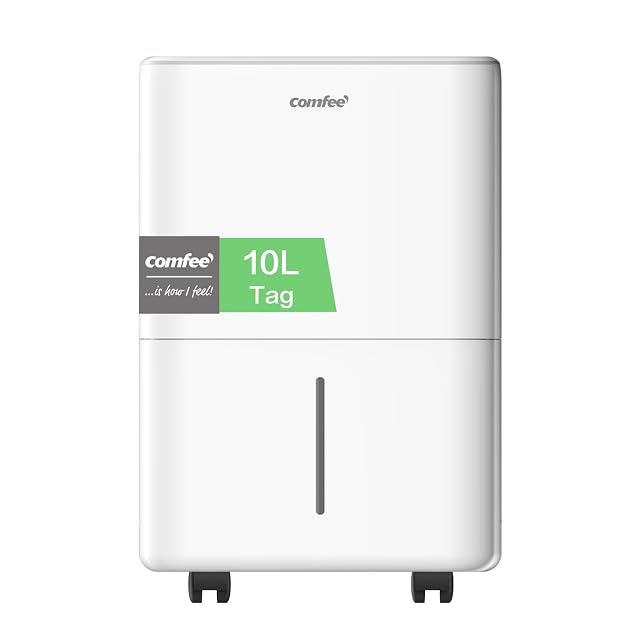
COMFEE’s Aqua Dry 10 lets you set an actual percentage — 35% to 85% — and the unit cycles to hold it. That’s meaningfully easier to keep in the comfortable band than a named-mode control, since you’re targeting a number rather than interpreting how a room feels on a given evening.
Measure independently of the appliance’s own sensor
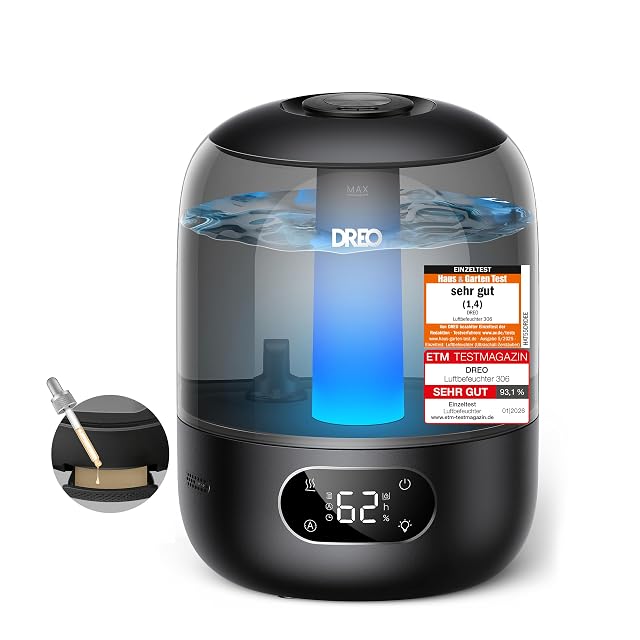
An appliance’s built-in humidity sensor sits inside or right next to the unit, which reads differently from the room at large — especially right in the path of a humidifier’s mist or a dehumidifier’s intake. A separate thermo-hygrometer placed a meter or two away gives a more honest picture of the room overall.
Different rooms, different targets
A bathroom or kitchen naturally runs more humid after use and doesn’t need chasing down to exactly 45% immediately — ventilation after cooking or showering does most of the work. A bedroom or living room, run continuously, benefits more from a steady numeric target.
What we would not do
Chase 30% humidity in winter to eliminate condensation entirely. Very low indoor humidity brings its own problems — dry skin, static, irritated sinuses — and a small amount of managed ventilation is usually a better fix for window condensation than driving humidity uncomfortably low.
The questions that keep coming up
What humidity range should I actually aim for?
Roughly 40% to 60% relative humidity suits most homes and most furniture. Below that, static and dry skin become more noticeable; above it, condensation and mold risk rise, particularly on cold surfaces like window frames and external walls.
My dehumidifier only has named modes, not a percentage — how do I use it precisely?
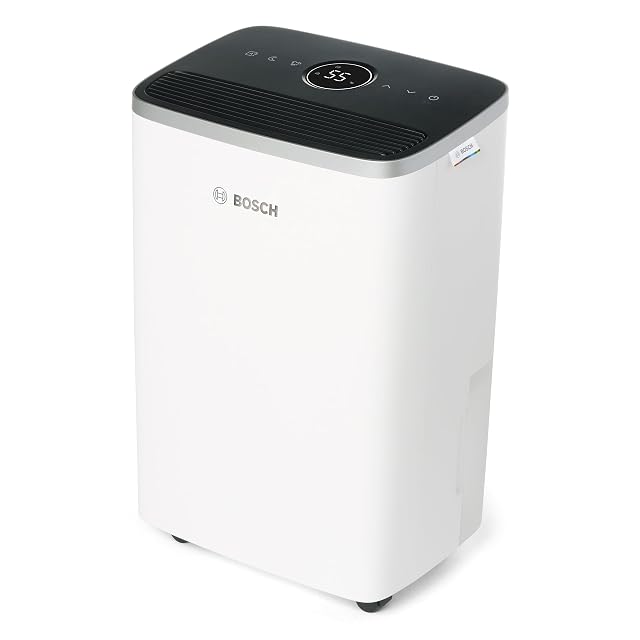
The Bosch Dry 4000 controls by preset (Auto, Night, Laundry) rather than a numeric dial. Pair it with a standalone thermo-hygrometer placed away from the unit's own airflow, and switch modes based on what that independent reading shows rather than guessing from the room's feel.
Last reviewed 24 August 2026