What the number actually measures
CADR — clean air delivery rate — states how much filtered air a purifier delivers per hour, typically in m³/h. It’s a genuinely standardized-style figure, unlike vague “purifies large rooms” marketing copy, and it’s the single best number for comparing purifiers against each other.
The room-size claim hides an assumption
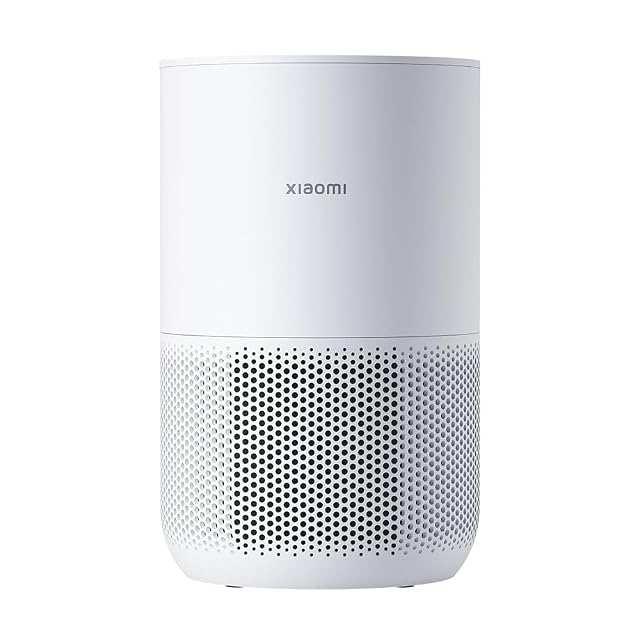
Xiaomi rates the Smart Air Purifier 4 Compact at 230 m (755 ft)³/h CADR for rooms up to 27 m (89 ft)². That coverage figure assumes the unit is run at a speed that achieves a target air-change rate — typically close to maximum. Run mostly on a quiet, low setting, the same unit clears a room far more slowly than the box implies.
Compare CADR at the speed you’ll actually use
If quiet overnight operation matters, check noise and airflow at low or sleep-mode speed specifically, not just the headline maximum-speed CADR. A purifier that’s excellent on paper at full speed but left on its lowest setting every night is working from a very different, much smaller effective CADR.
When CADR isn’t published at all
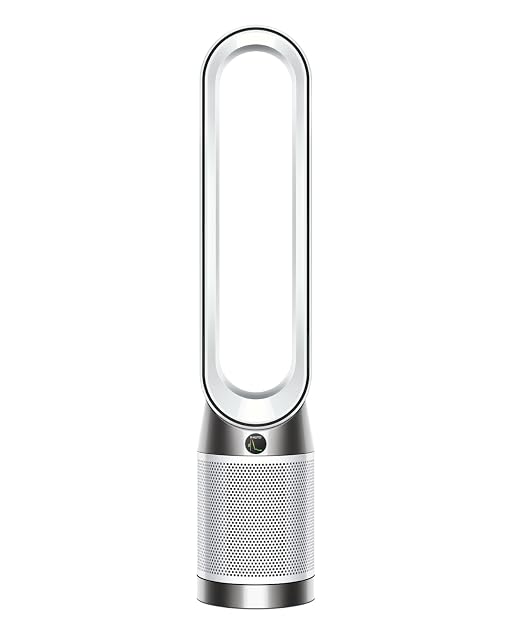
Some premium purifiers, including the Dyson Purifier Cool PC1 in this family, don’t publish CADR and lean instead on a particle-removal percentage or a sealed-filtration design claim. That’s a real gap for direct comparison — treat it as a different kind of specification, not a missing number to estimate.
What we would not do
Compare a stated CADR against a competitor’s room-size claim without checking whether both figures were measured the same way. Manufacturers rarely publish their test conditions, and two “230 m (755 ft)³/h” claims from different brands aren’t guaranteed to mean exactly the same thing.
The questions that keep coming up
Is a higher CADR always better?
For raw clearing speed, yes — but a higher CADR usually comes with a larger, noisier unit at full speed. If the purifier will run mostly on a low or auto setting, its noise and CADR at that specific speed matter more than the maximum-speed number on the box.
Why doesn't Dyson publish a CADR for the Purifier Cool PC1?
It isn't stated in the listings we checked. Dyson instead publishes a particle-removal percentage — 99.95% at 0.1 micron — which describes filtration efficiency rather than airflow volume, and the two figures can't be converted into each other from the data available.
Last reviewed 24 August 2026