Skip to content

The best electric space heater for 2026

Every heater in this family converts watts to heat at roughly the same efficiency. What actually separates them is how precisely that heat is controlled, and which safety features the manufacturer names outright rather than implies.

A mechanical dial, and the lowest price

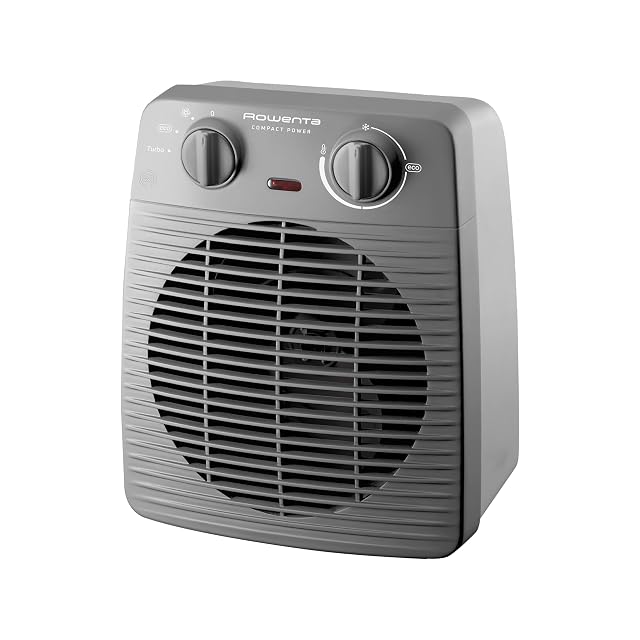
The Rowenta Compact Power is first for a straightforward, inexpensive heater with a mechanical thermostat and ECO/Turbo modes up to 2,000 W. It’s the simplest control of the three — a dial rather than a numeric setpoint.

A real thermostat, and the most complete safety spec

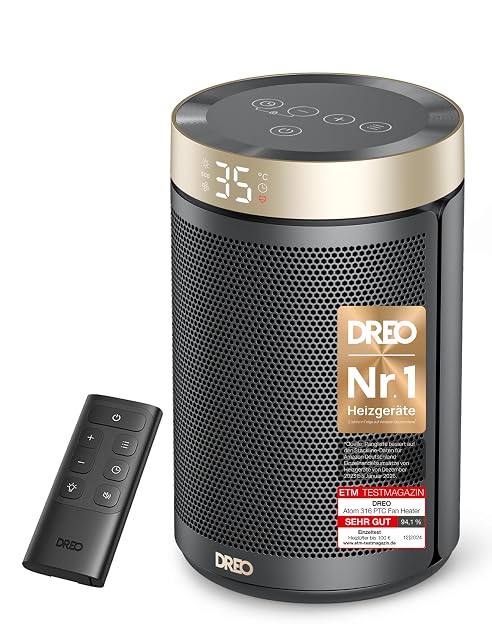
The Dreo Atom 316 is the step up for anyone who wants to set an actual target temperature: a 5–35 °C (41 to 95 °F) range in 1 °C steps, plus a tilt-detection tip-over sensor and overheat protection that Dreo names explicitly, unlike the Rowenta. At 34 dB it’s also the quietest of the three.

Silent, radiant heat for a well-insulated room

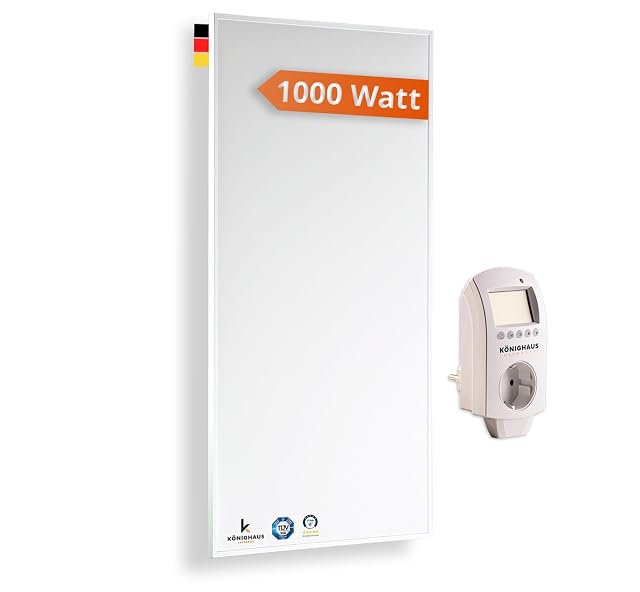
The Könighaus P-Serie 1000 W is the pick for completely silent operation — an infrared panel with no fan and no moving parts, backed by a 5-year warranty. It’s the most expensive of the three, a thermostat isn’t confirmed included, and Könighaus’s own copy says the panel suits a well-insulated room rather than sustained full-time heating in a drafty one.

What we would not do

Assume every heater in this family has a tip-over switch. Only the Dreo names one explicitly. If a heater will sit on a floor rather than mount to a wall, check for that feature by name in the listing rather than assuming it’s standard.

Which unit does your room need?

You want to warm a small room quickly
A fan heater: immediate warm-up, minimal bulk, at the price of noise.
You stay in one place
An infrared heater warms bodies rather than air, and the effect is immediate on whoever is in front of it.
You want gentle, lasting warmth
An oil-filled radiator: slow to rise, slow to fall, and silent.
You are heating a bathroom
The IP rating and the safety zones decide before any other consideration.

Picking by the room you have

Desk and workstation

Heating a person rather than a room: directed infrared uses less for the same comfort at the desk.

Spare bedroom

A silent oil-filled radiator with a thermostat, switched on an hour ahead. Noise is the first criterion here.

Bathroom

Short, intense use in a damp room. Safety leads, and the suitable fan heater remains the usual format.

Workshop or garage

A large, poorly insulated volume: a portable heater only ever warms a zone, never the whole space.

What is worth looking at, and what is not

The safety features
Tip-over, overheat, protection against splashes. They are the only features whose absence rules a machine out, and they cost almost nothing.
The thermostat
Without one the appliance heats continuously and you regulate by opening a window. Even a simple thermostat changes consumption.
Noise
A fan heater is heard, an oil-filled radiator is not. That decides which room will actually tolerate the appliance.
Output and the socket
A heater draws heavily and for a long time. The circuit and the socket must carry it, which rules out extension leads and adaptors.

Matching the figure to the room

Your needThe typeThe trade-off
Immediate warmthFan heaterNoisy, dries the air
Warmth aimed at youInfraredDoes not heat the room
Gentle, steady warmthOil-filledSlow to rise, heavy
Damp roomA model with the right IP ratingLimited choice

Where buyers go wrong

Plugging it into an extension lead
It is the leading cause of domestic incidents with these appliances. A heater plugs straight into a wall socket in good condition.
Leaving it unattended in a child's room
Safety features reduce the risk without removing it. A portable heater is not designed to run all night with nobody watching.
Heating a large room with a portable
The power available from a socket sets a limit: beyond a certain volume the appliance runs permanently without ever reaching setpoint.
Drying laundry on it
It is the commonest and most dangerous misuse: it blocks heat evacuation and puts fabric against a hot source.

By the household you are in

The workstation
Directed infrared, low output, on only while you are sitting there.
The cold bedroom
An oil-filled radiator with thermostat and timer, silent, with tip-over protection.
The bathroom
An appliance explicitly rated for the room, installed outside the prohibited zones.

Filters, servicing and working life

A portable heater is maintained mostly by dusting: dust burns on the element, smells, and fouls the fan. The cable and plug deserve particular attention, because they work under heavy load for hours at a time.

  • Dust grilles and interior before the heating season, unplugged.
  • Check the plug: yellowed or warm plastic signals a poor contact.
  • Test the tip-over cut-out by gently laying the switched-off appliance down.
  • Store it dry, with the cable not wound tightly around the body.

Safety

This is the category of domestic appliance where safety depends most on use and least on the product.

  • A dedicated wall socket, never an extension lead or a multi-way block.
  • Distance kept to curtains, beds and furniture.
  • Never laundry on top, not even for a moment.
  • Switch off when leaving the room, and do not run it overnight unattended.

The picks, and the reasoning

  1. Rowenta SO2212F0

    2,000 W max · ECO/Turbo · mechanical thermostat

    A compact electric fan heater with two heat stages — 1,000 W ECO and 2,000 W Turbo — plus a fan-only cool-blow setting. Rowenta publishes a mechanical thermostat, an automatic overheat shutoff with an integrated thermal fuse, and a 15-year repairability commitment backed by a network of 6,200 repair centers.

    Best for: A small room, bathroom, or desk where the priority is low upfront cost rather than precise temperature control.
    6.9/10

  2. Dreo DR-HSH006

    1,500 W PTC ceramic · 5–35 °C (41 to 95 °F) in ±1 °C steps · tip-over sensor

    A 1,500 W PTC ceramic heater — Dreo's 'Hyperamics' system — with a thermostat adjustable from 5 to 35 °C (41 to 95 °F) in 1 °C steps, a tilt-detection tip-over sensor, overheat protection, and V0 flame-retardant housing. Dreo states 34 dB of operating noise from its brushless DC motor, and units sold since 5 September 2025 include a remote control.

    Best for: A bedroom or home office where quiet running and a specific thermostat setpoint matter more than outright wattage.

    8.1/10

  3. Könighaus P-Serie 1000 W

    1,000 W infrared panel · wall-mount · aluminum frame

    A wall-mounted 1,000 W infrared radiant panel from Könighaus's P-Serie line, built into a powder-coated aluminum frame. Könighaus states no fan and no forced air circulation, publishes a wattage-to-room-size table across its whole line (130 W to 1,200 W), and backs the panel with a 5-year manufacturer warranty. The box includes mounting hardware and a 1.8 m (6 ft) cable — Könighaus's own listing does not confirm a thermostat is included.

    Best for: A well-insulated room where silent, fan-free radiant heat is worth paying more for than a fan heater's faster warm-up.

    8.7/10

The questions that keep coming up

Which heater has the most detailed published safety features?

The Dreo Atom 316, by a clear margin — it's the only one of the three that explicitly names a tilt-detection tip-over sensor alongside overheat protection. Always follow the manufacturer's own instructions for unattended or overnight use regardless of which model you choose.

Is infrared better than a fan heater?

They're not directly comparable from the published data. Infrared radiates heat with no fan and no moving air, which suits a well-insulated room; PTC ceramic fan heaters change a room's air temperature faster. Neither manufacturer publishes data that lets one technology be ranked above the other.

Is a portable heater expensive to run?

The cost depends on output and running hours, not on the technology: all convert electricity into heat the same way. Heating a person rather than a room is what genuinely cuts the bill.

Is infrared cheaper?

At equal output it uses the same, but it warms bodies directly: you can get equivalent comfort at lower output, provided you stay in its beam.

Can I use one in a bathroom?

Only an appliance rated for it, installed outside the safety zones around water points. A living-room fan heater has no place there.

Why does mine smell of burning?

Dust on the element, at the start of the season. If the smell persists beyond a few minutes, switch off and check nothing has fallen inside.

Thermostat or timer?

Both help, but the thermostat saves more: it stops the appliance once the setpoint is reached, whereas a timer heats blindly for the chosen period.

Can an oil-filled radiator be left plugged in permanently?

With a thermostat it stops on its own and runs more evenly. It remains a heater: it goes off when you leave the home.

Each unit, and the room it suits

Rowenta SO2212F0

Suits: A small room, bathroom, or desk where the priority is low upfront cost rather than precise temperature control.

Strongest point: Two heat stages (1,000 W / 2,000 W) plus a cool-blow fan-only setting for use outside winter

Weakest point: No tip-over switch is mentioned on any of the four markets we checked

Read the full review →

Dreo DR-HSH006

Suits: A bedroom or home office where quiet running and a specific thermostat setpoint matter more than outright wattage.

Strongest point: PTC ceramic element is explicitly named by the manufacturer, not just implied

Weakest point: Not sold with a live offer on Amazon.com at the time we checked, despite having a US catalog listing

Read the full review →

Könighaus P-Serie 1000 W

Suits: A well-insulated room where silent, fan-free radiant heat is worth paying more for than a fan heater's faster warm-up.

Strongest point: The only radiant, fan-free heater in this comparison — no moving air and no fan noise, per Könighaus

Weakest point: A thermostat is not confirmed to be in the box — budget for one separately unless the listing photos show otherwise

Read the full review →

What your money buys at each level

What to buy alongside

Filters and spares from the same aisle, at the price we read. Confirm the fit against the unit you pick before ordering: it turns on the size and the part number, both of which the product page gives.

Short, before the detail

Comparisons worth reading

Direct comparisons we have already published between two units from this guide or this aisle.

Where these numbers come from

The units on this page are drawn from the catalog of this site. Figures are the ones the maker publishes and the ones on the Amazon listing; prices are what Keepa recorded on the date shown, and neither stands still. The order follows declared figures, the weight of stated strengths against stated limits, and price. Nothing on this site has been run in person, and no page here pretends otherwise.

Last checked on

Prices quoted in these summaries are dated readings. The live price is shown next to each product.

The tool we use ourselves

Chosen your tool? Now buy it at the right price.

Portable air conditioners and dehumidifiers swing by fifty dollars or more across the year, and the biggest "discounts" often land at prices the same model sold for six weeks earlier. UniverTrack tracks the real price history across retailers, spots fake reductions, and alerts you when it is genuinely the moment to buy.

Real price historyBuy-now alertsAI buying assistant
Try free for 14 days →
No commitment · Cancel in one click · 5 languages