Skip to content

The best air purifier for 2026

All three of these are HEPA-filtered, and all three publish real, verified prices on four European markets. What separates them is how much of the standard comparison sheet each brand is willing to publish.

The smallest room, the lowest price

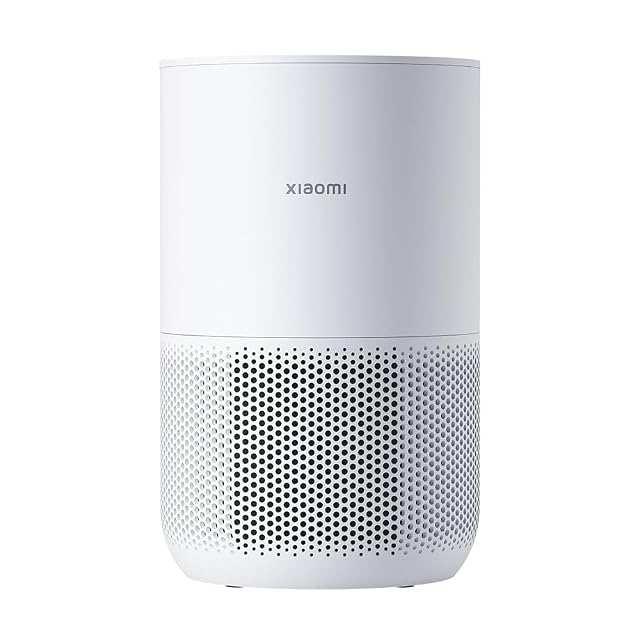
The Xiaomi Smart Air Purifier 4 Compact is first for a bedroom or small office. It publishes a real 230 m (755 ft)³/h CADR, an 18.3 dB sleep-mode figure, and a live filter-life countdown on its own OLED screen — a genuinely complete spec sheet at the lowest price of the three.

A sensor that actually drives the fan speed

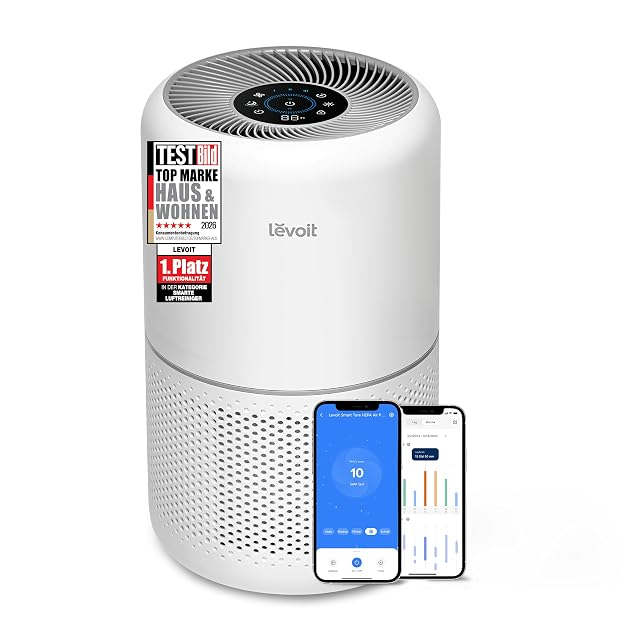
The Levoit Core 300S is the step up for a living room, specifically because its laser particle sensor adjusts fan speed to measured air quality rather than a fixed schedule. Its own room-coverage claim varies between market listings — 41 m (135 ft)² on the Spanish page, 50 m (164 ft)² on the German one — so size a purchase to the more conservative figure.

Two jobs from one machine, at a real cost

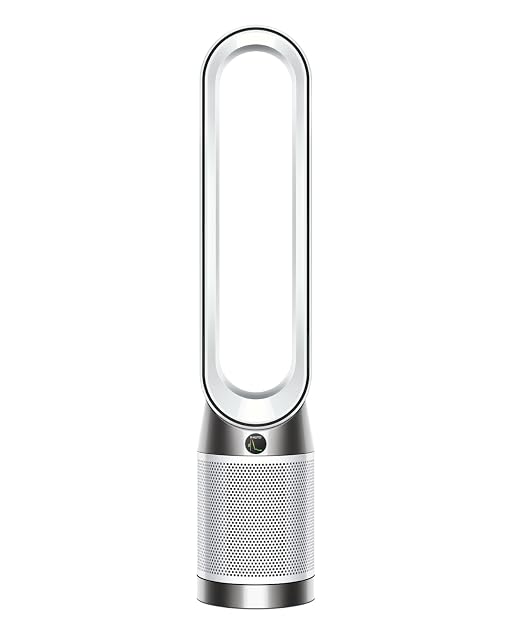
The Dyson Purifier Cool PC1 is the pick only if you specifically want a purifier that also works as a genuine cooling tower fan. Dyson publishes fewer comparison numbers than the other two — no CADR, no absolute noise rating, no filter-replacement interval — so you are trusting the sealed-HEPA-H13 design claim over a line-by-line spec sheet.

What we would not do

Buy the Dyson for CADR. It doesn’t publish one, so there’s nothing to compare against the Xiaomi’s 230 m (755 ft)³/h or the Levoit’s 195 m (640 ft)³/h on that specific number — the Dyson earns its price on design and the added fan function, not on a bigger filtration figure.

Which unit does your room need?

You are dealing with allergies or fine particles
A rated HEPA filter, and an airflow matched to the room. It is the filter-and-airflow pair that decides, not the number of modes.
You are dealing with smells or volatile compounds
You need activated carbon by weight, not a tinted veil. The stated carbon mass, where it is given, says more than the words "odor filter".
It goes in a bedroom
Noise at the lowest speed becomes the only criterion that matters: a purifier switched off at night purifies nothing.
You are treating a large living room
Look at clean air delivery against the real floor area, remembering those figures are measured at full speed — the speed you will almost never use.

Picking by the room you have

An allergy sufferer's bedroom

Continuous running, low speed, all night. Noise and filter cost matter more here than peak power.

Living room with pets

Hair and dander load the pre-filter very fast. A washable pre-filter changes the whole economics of the appliance.

Open-plan kitchen

Cooking smells need carbon, and plenty of it. HEPA alone does not hold what smells.

Home office

Small volume, one occupant, eight hours of running. The trade-off is between noise and consumption, not maximum airflow.

What is worth looking at, and what is not

Clean air delivery, against your room
An airflow figure with no floor area says nothing, and a floor area with no air changes per hour says no more. The two belong together, and makers rarely publish both.
Noise at the speed you will actually use
Quoted figures are for whichever speed flatters — lowest or highest. What counts is the level at the speed that genuinely treats your room.
The annual cost of filters
This is what decides the real cost. A cheap machine with proprietary, frequent filters costs more over three years than a dearer one on common ones.
How much activated carbon
Against smells it is the mass that works. A carbon veil glued to the HEPA saturates within weeks and stops acting with nothing to signal it.
The pre-filter
Washable or disposable: the first is rinsed, the second is repurchased. In a home with pets, the difference runs to dozens of washes a year.

Matching the figure to the room

What you want removedWhat it takesWhat will not do
Pollen, fine dustA HEPA and matched airflowAn "allergy" mode with no rated filter
Cooking smells, smokeActivated carbon by weightA carbon veil on the HEPA
Pet hairA washable pre-filterA HEPA alone, which blinds
Volatiles after building workCarbon and ventilationA purifier alone, windows shut

Where buyers go wrong

Buying on the stated floor area
It is calculated at full speed and at a minimal air-change rate. In a bedroom where the machine runs at its lowest, the area genuinely treated is far smaller.
Forgetting the price of filters
Some machines want two filters a year. Over three years that frequently exceeds the purchase price, and nobody sees it coming.
Shutting the room and thinking that helps
A purifier is not ventilation: it removes particles, not carbon dioxide. A bedroom closed all night is still a badly aired bedroom.
Choosing an ioniser to avoid filters
Machines promising purification with no consumable move the problem rather than solving it, and some produce ozone. The filter is what physically removes matter.

By the household you are in

The allergy sufferer
A rated HEPA, a machine quiet at low speed, filters that are available and affordable. The rest is secondary.
The household with pets
A washable pre-filter first, then capacity. Hair is what dictates how often you will be cleaning.
The one who reads the numbers
A machine that publishes airflow and noise at every speed deserves more trust than one showing a single flattering figure.

Filters, servicing and working life

A purifier lives on its filters and its pre-filter. A blocked pre-filter drops the airflow long before the HEPA is saturated, and the machine goes quiet because it has stopped treating anything. No filter life can be quoted here: it depends on the air in the room, not on the calendar.

  • Rinse or vacuum the pre-filter regularly: it is the step that returns most.
  • Never wash a HEPA filter unless it is explicitly washable; water destroys its capture.
  • Change the carbon when smells return, without waiting for the alert: it counts hours, not molecules.
  • Dust the air inlet grille, often forgotten behind the machine.

Safety

The risk lies less in the machine than in what you ask of it.

  • A purifier treats neither carbon monoxide nor radon: those two want a detector, not a filter.
  • Avoid machines that produce ozone in an occupied room.
  • Leave clearance around the grilles so the motor does not overheat.
  • Unplug before any filter change, even on a machine that is switched off.

The picks, and the reasoning

  1. Xiaomi Smart Air Purifier 4 Compact

    230 m (755 ft)³/h CADR · True HEPA · up to 27 m (89 ft)²

    A compact HEPA purifier Xiaomi rates at 230 m (755 ft)³/h particulate CADR and 185 m (607 ft)³/h formaldehyde CADR for rooms up to 27 m (89 ft)². An OLED touchscreen shows live air quality, sleep mode is rated at 18.3 dB, and the app tracks a 6-12 month filter life.

    Best for: A bedroom or small home office where a compact footprint and a low purchase price matter more than covering a large open-plan room.

    7.0/10

    ≈ $120

  2. Levoit Core 300S

    195 m (640 ft)³/h CADR · laser sensor · 22 dB sleep mode

    Levoit rates the Core 300S at 195 m (640 ft)³/h CADR with a laser particle sensor that drives an automatic mode and a four-color air-quality ring. Sleep mode is published at 22 dB, and the filter accepts three optional specialty cartridges for pet odor, mold spores or vehicle exhaust.

    Best for: A living room or bedroom where automatic speed adjustment and a quiet sleep mode matter, and where the household wants the option to swap in a specialty filter later.

    7.6/10

  3. Dyson Purifier Cool PC1

    Sealed HEPA H13 · bladeless tower · fan + purifier

    Dyson's Purifier Cool PC1 combines a bladeless tower fan with a fully sealed HEPA H13 filtration system the brand rates at 99.95% removal down to 0.1 micron, tested to EN 1822. Dyson does not publish a CADR figure or an absolute noise-level rating for this model.

    Best for: A household that wants one device to handle both summer cooling and air purification and is willing to pay a premium for Dyson's sealed-filtration design and app ecosystem.

    8.4/10

The questions that keep coming up

Which one has the best CADR for the price?

Xiaomi publishes 230 m (755 ft)³/h for roughly 68 €, the strongest CADR-per-euro figure of the three. Levoit's Core 300S publishes 195 m (640 ft)³/h at a higher price, but adds a laser sensor and automatic mode Xiaomi doesn't state. Dyson publishes no CADR figure at all.

Is the Dyson worth the premium?

Only if the combined fan-and-purifier function and Dyson's sealed-machine design matter to you specifically. It costs roughly six times the Xiaomi and publishes fewer of the standard comparison numbers — no CADR, no absolute noise rating, no stated filter life.

Should it run all the time?

A purifier only treats the air while it runs; switched off, the room reloads within hours. Continuous running at low speed is generally more effective and quieter than a brief burst at full power.

Does a purifier help with damp or mold?

It can remove airborne spores, but it does nothing about the cause. While humidity stays high the mold returns: what you need is a dehumidifier or ventilation, with the purifier alongside.

Where should it stand in the room?

Clear on its inlets and outlets, away from walls and curtains, and preferably in the zone you occupy. Wedged behind furniture it recirculates its own air and does little.

Are the built-in air quality sensors reliable?

They show a trend rather than a measurement. Useful for triggering the automatic mode; not enough to judge actual air quality, which is a job for a dedicated monitor.

Does a filterless model really exist?

Machines promise purification with no consumable, by ionization or plasma. They move matter rather than capture it, and some produce ozone. The filter remains what physically removes particles.

Do I need one per room?

A purifier treats the volume it sits in, doors closed. One machine carried from room to room only ever treats one room at a time, and the clock restarts with every move.

Each unit, and the room it suits

Xiaomi Smart Air Purifier 4 Compact · $120

Suits: A bedroom or small home office where a compact footprint and a low purchase price matter more than covering a large open-plan room.

Strongest point: 230 m (755 ft)³/h particulate CADR is a strong number for the price bracket

Weakest point: Manufacturer room rating tops out at 27 m (89 ft)², modest next to the 900 Series or Core 300S

Read the full review →

Levoit Core 300S

Suits: A living room or bedroom where automatic speed adjustment and a quiet sleep mode matter, and where the household wants the option to swap in a specialty filter later.

Strongest point: Laser sensor and auto mode adjust fan speed to measured air quality rather than a fixed schedule

Weakest point: Levoit's own room-size claim varies by market listing — 41 m (135 ft)² in the Spanish listing versus up to 50 m (164 ft)² in the German one — so treat either as an upper bound, not a guarantee

Read the full review →

Dyson TP11

Suits: A household that wants one device to handle both summer cooling and air purification and is willing to pay a premium for Dyson's sealed-filtration design and app ecosystem.

Strongest point: Whole-unit sealed HEPA H13 system, not just a sealed filter cartridge, is a stronger design claim than the other three units here

Weakest point: Dyson does not publish a CADR figure, which makes direct coverage comparison against the Levoit, Philips or Xiaomi units impossible on that specific metric

Read the full review →

What to buy alongside

Filters and spares from the same aisle, at the price we read. Confirm the fit against the unit you pick before ordering: it turns on the size and the part number, both of which the product page gives.

Short, before the detail

  • If what matters most is our rating → look at Dyson TP11

Comparisons worth reading

Direct comparisons we have already published between two units from this guide or this aisle.

Where these numbers come from

The units on this page are drawn from the catalog of this site. Figures are the ones the maker publishes and the ones on the Amazon listing; prices are what Keepa recorded on the date shown, and neither stands still. The order follows declared figures, the weight of stated strengths against stated limits, and price. Nothing on this site has been run in person, and no page here pretends otherwise.

Last checked on

Prices quoted in these summaries are dated readings. The live price is shown next to each product.

The tool we use ourselves

Chosen your tool? Now buy it at the right price.

Portable air conditioners and dehumidifiers swing by fifty dollars or more across the year, and the biggest "discounts" often land at prices the same model sold for six weeks earlier. UniverTrack tracks the real price history across retailers, spots fake reductions, and alerts you when it is genuinely the moment to buy.

Real price historyBuy-now alertsAI buying assistant
Try free for 14 days →
No commitment · Cancel in one click · 5 languages