Skip to content

The best convector or panel heater for 2026

None of these use a fan — they warm a room by natural convection or radiation, running near-silently. What separates them is thermal inertia: whether the unit keeps releasing stored heat after the element switches off, which changes how a schedule should be set.

A basic convector, no inertia claimed

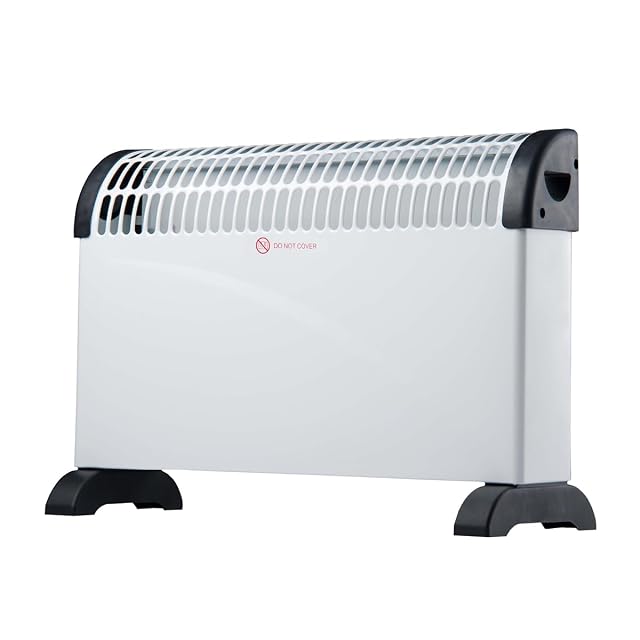
The Alpina CHYO2 is first for the simplest, least expensive option: 2,000 W across 3 heat settings, with natural convection and no fan — but no thermal-inertia feature published, so it cools as soon as the element switches off.

A ceramic core, and real scheduling

The Bestherm ALBA steps up to a ceramic dry-inertia core with LCD touch programming across 3 presets plus one custom slot, and Fil Pilote compatibility for French smart-heating setups.

Fluid inertia, free programming, French certification

The Noirot Radiaflo is the premium pick: mineral oil heated by an immersion resistance for genuine thermal inertia, free daily and weekly programming, and both Origine France Garantie and NF certification. It’s the most expensive of the three by a wide margin, and at the time of checking was confirmed for sale in France only.

What we would not do

Expect the Alpina to hold warmth the way the other two do. It’s a genuine convector at a genuine entry price, but with no stated inertia core, the room starts cooling as soon as it switches off — factor that into how a thermostat schedule is set.

Which unit does your room need?

You are heating a room that is occupied all day
A radiant panel or a storage-type radiator: the heat is steadier and less drying than a convector.
You are heating a cold room occasionally
A convector warms up fast and costs less. It is the right tool for a bathroom or a spare bedroom.
You want to control your heating
It is the thermostat that decides, not the heating element: an accurate electronic thermostat saves more than any change of technology.
The room is damp
The ingress protection rating becomes a safety criterion, and it dictates the minimum distance to water points.

Picking by the room you have

Main heating for a room

The appliance runs for hours: control and thermal mass matter more than peak output, which only serves the warm-up.

Brief top-up heat

Bathroom in the morning, office for an hour: here speed of warm-up wins, and the convector or fan heater takes the lead.

Frost protection

An unoccupied room held above freezing. A reliable low setpoint beats a big output.

Bedroom

The click of the thermostat and the tick of expanding metal are noticed at night, and appear on no datasheet.

What is worth looking at, and what is not

Control, before technology
A mechanical thermostat lets the temperature swing widely; an electronic one holds it far closer. It is the first source of savings, before choosing between convector and panel.
Output against volume
Oversizing makes the appliance cycle and feels uncomfortable; undersizing makes it run continuously without reaching setpoint. Volume and insulation both count.
Programming
Programming a night setback and absences returns more than most quoted efficiency differences, since every electric appliance turns electricity into heat with the same efficiency.
Mounting and footprint
A panel goes on the wall and frees the floor; a convector on castors moves but gets in the way. That choice governs real use far more than the datasheet.

Matching the figure to the room

Your needThe applianceWhy
Warm a cold room quicklyConvectorFast warm-up, low mass
Steady comfort all dayRadiant panel or storage typeMore even temperature
BathroomA model with the right IP ratingDamp imposes rules
Frost protectionA reliable low setpointOutput hardly matters

Where buyers go wrong

Believing in superior efficiency
Every resistive electric heater converts the same energy into the same heat. What differs is distribution, control and comfort, not efficiency.
Placing a heater under a poor window without thinking
Position governs comfort: under a window the appliance offsets the cold surface, but a window in bad condition has it heating the street.
Using an extension lead
A heater draws a continuous, high current. Extension leads and multi-way adaptors get hot, and this is a recurring cause of fires.
Covering the appliance
A cloth laid on a convector blocks convection and raises the surface temperature. The prohibition symbol is on nearly every appliance, and it is there for this reason.

By the household you are in

The main room
A well-controlled, programmable panel sized on actual volume. Comfort comes from steadiness, not from output.
Occasional top-up
A simple, mobile convector with tip-over protection. Inexpensive and suited to brief use.
The poorly insulated home
No radiator rescues a leaky building: money spent on insulation returns more than the difference between two appliances.

Filters, servicing and working life

An electric heater asks little, but dust settled on the element burns and smells, and a blocked grille unbalances convection. No lifespan can be quoted: these appliances age mostly through their thermostat and their wiring.

  • Dust the grilles and the interior before each heating season, cold and unplugged.
  • Check the cable and plug, which work under heavy load.
  • Make sure nothing is placed or dried on the appliance, even briefly.
  • Listen to the thermostat: a click that grows more frequent signals control on the way out.

Safety

Electric heating concentrates three risks: the hot surface, the continuous electrical load and flammable material nearby.

  • Never an extension lead or a multi-way adaptor: a dedicated socket in good condition.
  • Respect distances to curtains, furniture and laundry.
  • In a wet room, respect the safety zones and the required IP rating.
  • Never use an appliance whose grille is deformed or whose cable is marked.

The picks, and the reasoning

  1. Alpina CHYO2

    2,000 W · 3 heat settings · natural convection, no fan

    A basic 2,000 W electric convector with three heat settings — 750 W, 1,250 W, and a 2,000 W 'Turbo' stage — controlled by an adjustable thermostat dial. Alpina describes pure natural convection with no fan, rates it for rooms up to 15 m (49 ft)², and states overheat protection. It's the cheapest heater in this family, but one of the four markets we checked shows a data problem worth knowing about before you buy.

    Best for: The cheapest way into this family — a small room, workshop, or occasional-use space where basic convection heat at low upfront cost matters more than programming or thermal inertia.
    6.9/10

  2. Bestherm ALBA

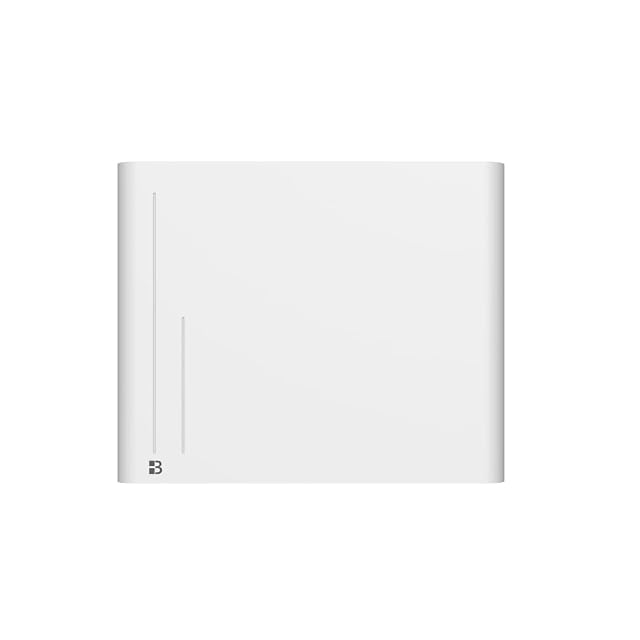
    1,000 W ceramic dry inertia · LCD touch programming · Fil Pilote

    A wall-mounted 1,000 W electric radiator built around a ceramic dry-inertia core — Bestherm states it keeps diffusing stored heat after the element switches off, unlike a plain convector. Programming runs through a touch LCD screen with 3 pre-loaded weekly programs plus 1 custom program, and the unit supports France's 6-order Fil Pilote wired protocol. Bestherm also states a window-open detector, child lock, overheat protection, and a 2-year warranty with France-based support.

    Best for: A single room around 10 m (33 ft)² where scheduled inertia heat is worth the step up from a plain convector — especially if your home already has French Fil Pilote wiring to plug it into.

    8.1/10

  3. Noirot Radiaflo

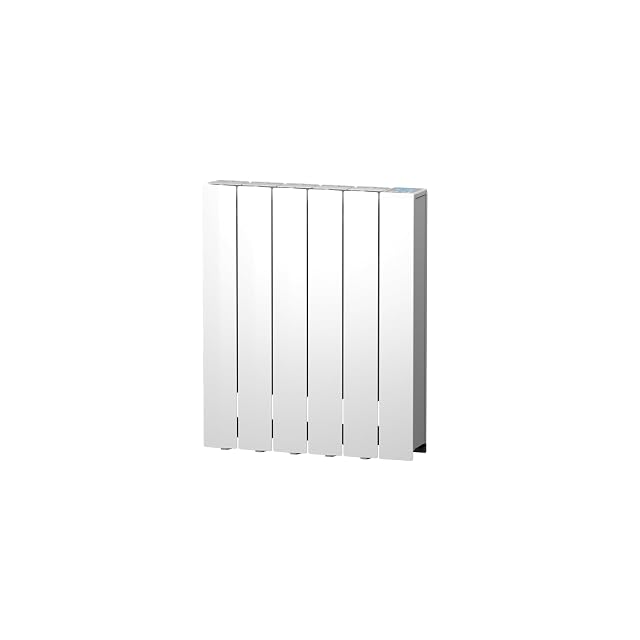
    1,000 W fluid inertia · daily/weekly programming · NF-certified, made in France

    A 1,000 W electric radiator using fluid thermal inertia — Noirot heats mineral oil with an immersion resistance, so the unit keeps radiating stored warmth after the element cuts out. It carries free daily and weekly programming, a window-open detector, a parental lock, Origine France Garantie and NF certification, and Noirot states it was voted 'Product of the Year 2024' in France. It's the most expensive heater in this family, and we could only confirm a live offer on one of the six markets we checked.

    Best for: Someone in France specifically who wants a French-made, NF-certified fluid-inertia radiator with full daily and weekly programming, and is fine paying a real premium for it.

    8.1/10

The questions that keep coming up

Which of these holds heat longest after switching off?

The Noirot Radiaflo, by design — it heats mineral oil with an immersion resistance specifically for thermal inertia. The Bestherm ALBA uses a ceramic dry-inertia core with the same general idea through a solid medium. The Alpina CHYO2 is a basic convector with no stated inertia feature.

Is the Noirot worth roughly four times the Bestherm's price?

Only if free daily/weekly programming, French NF certification and genuine fluid inertia matter to you specifically — and only if you're buying from France, where at the time of checking it was the only market with a confirmed live offer.

Does a storage radiator use less?

For equal comfort the energy required is the same: control and heat distribution make the felt difference. Thermal mass smooths variation, it does not create energy.

Should I turn the heating down when I go out?

Yes for an absence of several hours: the energy saved during the setback exceeds that of the recovery. For a few minutes it is not worth it.

Why does my convector smell of burning when first switched on?

It is dust settled on the element over the summer. The smell goes after a few minutes; if it persists, switch off and check nothing has fallen inside.

What output for a room?

It depends on volume, insulation, exposure and losses through the windows. The same floor area does not need the same output in a new building and in an old house.

Can I run two heaters from one socket?

No. Each heater draws a large, continuous current; adding them on one socket quickly exceeds what it and its circuit can carry.

Are connected models worth it?

They mostly serve to program and to control remotely, which genuinely saves when schedules vary. The useful function is programming; connectivity is only a means to it.

Each unit, and the room it suits

Alpina CHYO2

Suits: The cheapest way into this family — a small room, workshop, or occasional-use space where basic convection heat at low upfront cost matters more than programming or thermal inertia.

Strongest point: Three heat settings, including a 2,000 W top stage, for a genuinely adjustable convector rather than a single-output heater

Weakest point: The ASIN's ES listing currently returns an unrelated product — a wall lamp, not a heater — so we're not counting Spain as a confirmed market

Read the full review →

Bestherm ALBA

Suits: A single room around 10 m (33 ft)² where scheduled inertia heat is worth the step up from a plain convector — especially if your home already has French Fil Pilote wiring to plug it into.

Strongest point: Ceramic dry-inertia core with a specific, named mechanism — Bestherm states it keeps radiating stored heat after the element cuts out, unlike the plain convectors in this family

Weakest point: German stock has been noticeably less reliable — Keepa's 90-day data shows the DE listing out of stock roughly half the time, versus effectively always in stock on FR and IT

Read the full review →

Noirot Radiaflo

Suits: Someone in France specifically who wants a French-made, NF-certified fluid-inertia radiator with full daily and weekly programming, and is fine paying a real premium for it.

Strongest point: The only fluid-inertia radiator in this family — mineral oil retains and releases heat differently than the ceramic dry-inertia core in the Bestherm ALBA reviewed alongside it

Weakest point: Confirmed for sale on only one of the six markets we checked (FR) — the identical ASIN exists with a matching title and EAN on DE, IT, ES, US, and GB, but carried zero live offers on any of them at check time

Read the full review →

What your money buys at each level

What to buy alongside

Filters and spares from the same aisle, at the price we read. Confirm the fit against the unit you pick before ordering: it turns on the size and the part number, both of which the product page gives.

Short, before the detail

Where these numbers come from

The units on this page are drawn from the catalog of this site. Figures are the ones the maker publishes and the ones on the Amazon listing; prices are what Keepa recorded on the date shown, and neither stands still. The order follows declared figures, the weight of stated strengths against stated limits, and price. Nothing on this site has been run in person, and no page here pretends otherwise.

Last checked on

Prices quoted in these summaries are dated readings. The live price is shown next to each product.

The tool we use ourselves

Chosen your tool? Now buy it at the right price.

Portable air conditioners and dehumidifiers swing by fifty dollars or more across the year, and the biggest "discounts" often land at prices the same model sold for six weeks earlier. UniverTrack tracks the real price history across retailers, spots fake reductions, and alerts you when it is genuinely the moment to buy.

Real price historyBuy-now alertsAI buying assistant
Try free for 14 days →
No commitment · Cancel in one click · 5 languages