Skip to content

The best dehumidifier for 2026

Rated extraction spans a factor of nearly seventy between the smallest and largest unit here. The right pick is decided by the size of the damp problem, not by which one has the lowest price or the best-known name.

A wardrobe or a caravan, not a room

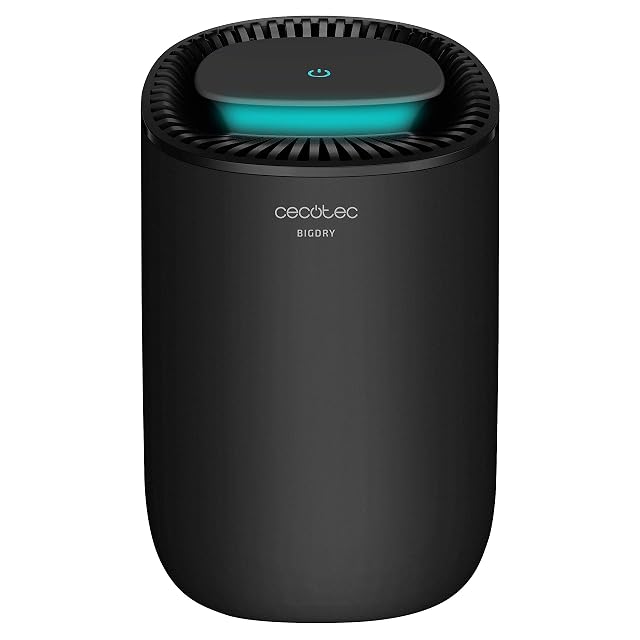
The Cecotec BigDry 2000 is first for light, occasional condensation in a small enclosed space. At 300 ml/24h and 900 g (31.7 oz), it is a standby unit rather than a room-by-room appliance, with automatic shutoff when its 0.6 L tank fills and no continuous-drain option published.

A numeric target, and a genuine room-size rating

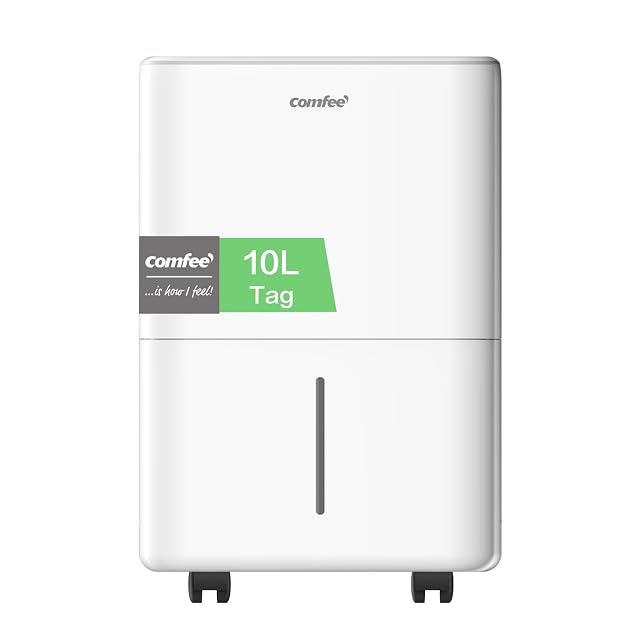
The COMFEE’ Aqua Dry 10 is the pick for an actual room with a real damp problem, and specifically for anyone who wants to set a number rather than pick a mode: COMFEE’ publishes an adjustable 35%–85% humidity target alongside a stated 36 dB noise figure and R290 refrigerant.

A recognized brand, and mode-based simplicity

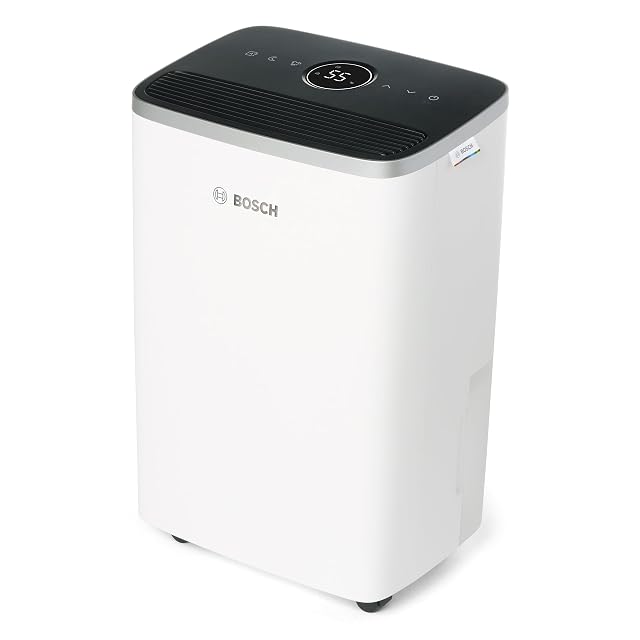
The Bosch Dry 4000 trades a numeric dial for three named presets — Auto, Night, Laundry — and publishes the largest stated room coverage of the three, up to 33 m (108 ft)². It’s also, at 38 dB, the noisiest of the three, and the only one with no continuous-drain option described in its listing.

What we would not do

Assume Bosch’s brand recognition means better performance. Its rated 16 L/24h extraction is actually lower than what some cheaper compressor units in this family publish — the premium here buys a known name and simple mode-based control, not a bigger number.

Which unit does your room need?

Your room is heated
A compressor dehumidifier, more effective above a certain temperature and less hungry.
You are treating a cold garage or cellar
A desiccant model, which keeps working where a compressor loses its efficiency.
You are drying laundry
Look for a dedicated mode and generous capacity: it is the use that produces the most water in the least time.
You are fighting mold
A dehumidifier treats humidity in the air, not an ingress. If the wall is wet from outside, it will run without end.

Picking by the room you have

Damp bedroom

Night running: compressor noise becomes the deciding criterion, ahead of capacity.

Drying laundry

Intense and brief. Tank capacity decides how often you empty it, and continuous drainage removes the chore.

Cellar and garage

Low temperatures, dust, permanent running. This is where technology and filter matter most.

After a leak

Temporary and intense, often continuous. Hose drainage becomes essential.

What is worth looking at, and what is not

The conditions behind the quoted capacity
Liters per day are measured at a set temperature and humidity, generally high. In a cellar at fifteen degrees, an appliance will deliver far less than its figure.
The humidistat
Being able to set a target humidity and let the machine stop changes both consumption and comfort. A machine with no setpoint runs until it over-dries.
Continuous drainage
A hose connection removes the daily emptying. On permanent duty it is the difference between an appliance in use and one stopped because its tank is full.
Noise and placement
A compressor is noisy and vibrates. Standing on a timber floor it passes that on to the whole room; a thick mat solves part of it.

Matching the figure to the room

Your situationThe technologyWhat to plan for
Heated roomCompressorA humidistat and clear space around it
Cold cellar or garageDesiccantHigher consumption
Drying laundryCompressor, dedicated modeContinuous drainage
Wall wet from outsideNoneTreat the cause, not the air

Where buyers go wrong

Buying on liters per day
It is a laboratory figure, obtained in warm humid conditions your room does not reach. Two machines with the same number can perform very differently in your home.
Running it with a window open
It then treats outdoor air, endlessly. The room must be shut while it runs, and aired at another time.
Targeting too low a level
Over-drying costs energy, irritates airways and damages timber. A sensible setpoint is enough to stop condensation.
Confusing condensation with ingress
Condensation is dealt with by ventilation and a dehumidifier; an ingress or rising damp is dealt with by building work. A machine that runs without ever reaching setpoint points to the second.

By the household you are in

The damp flat
A compressor model with a humidistat and a decent tank. Noise decides which room will tolerate it.
The cellar
A model rated for low temperatures, on continuous drainage, with a filter cleaned often.
The laundry dryer
Generous capacity, dedicated mode, drain hose. The appliance then replaces part of a tumble dryer.

Filters, servicing and working life

A dehumidifier fouls through its filter and its exchanger. A blocked filter drops the airflow and the output, and standing water in the tank quickly becomes a smell problem. No interval can be quoted: it all depends on the dust in the room.

  • Clean the filter regularly, more often in a cellar or garage.
  • Empty and rinse the tank even on continuous drainage, where a residue remains.
  • Keep the grilles clear: some models take in and blow out on the same side.
  • Carry and store it upright: a compressor laid down needs to settle before restarting.

Safety

The risks are those of an electrical appliance that produces water.

  • Never stand it on a surface that water would damage, and check the drain hose connection.
  • Do not use it to dry a room after an electrical incident without isolating the supply.
  • Keep it upright, including in transport.
  • Do not block the grilles, or the compressor overheats.

The picks, and the reasoning

  1. Cecotec BigDry 2000

    300 ml/24h · 0.6 L tank · up to 20 m (66 ft)²

    A compact, low-power dehumidifier rated by Cecotec at 300 ml of water removed per 24 hours, for rooms up to 20 m (66 ft)². A removable 0.6 L tank, automatic shutoff when full, a carry handle and a minimum stated consumption of 23 W make it a light standby unit rather than a room-by-room appliance.

    Best for: A single small room, a wardrobe, a caravan or a car — somewhere a cheap standby unit against light condensation is enough, not a damp cellar or a family bathroom.
    7.1/10

  2. COMFEE' Aqua Dry 10

    10 L/24h · 2.5 L tank · 36 dB

    A compressor dehumidifier rated by COMFEE' at 10 liters removed per 24 hours, with a 2.5 L tank, an adjustable target humidity between 35% and 85%, a stated 36 dB noise level, child lock and castors. COMFEE' uses R290 refrigerant and lists it for rooms of roughly 16-31 m (52 to 102 ft)² depending on the market.

    Best for: A bedroom, small basement or laundry room where a numeric humidity target and quiet overnight running matter more than the largest possible liters-per-day figure.

    7.9/10

  3. Bosch Dry 4000

    16 L/24h · 2.5 L tank · 3 automated modes

    A compressor dehumidifier from Bosch rated at 16 liters removed per 24 hours for rooms up to 33 m (108 ft)², with a half-transparent 2.5 L tank, three automated modes (Auto, Night, Laundry) called 'Easy Dry Select,' a stated 38 dB noise level, an integrated handle and castors. Bosch does not publish WiFi or app control for this model.

    Best for: Buyers who want a known appliance brand and simple mode-based control rather than a numeric humidity dial, and who don't need app control or continuous drainage.

    8.3/10

The questions that keep coming up

Is a bigger liters-per-day figure always better?

Only if the room needs it. Cecotec's 300 ml/24h BigDry is sized for a wardrobe or caravan, not a damp cellar — buying a 16 L/24h compressor unit for a small enclosed space is unnecessary weight, noise and cost.

Which one lets you set a specific humidity target?

COMFEE's Aqua Dry 10 publishes a numeric 35%–85% adjustable target. Bosch's Dry 4000 controls by named mode (Auto, Night, Laundry) rather than a percentage dial, and Cecotec's BigDry has no target-humidity control published at all.

What humidity level should I aim for?

A moderate level is enough to stop condensation on cold surfaces without drying the air out. Going lower costs more and adds no comfort.

Does a dehumidifier heat the room?

A compressor model gives back a little heat, a desiccant one noticeably more. It is not a heater, but the effect is felt in a small room.

Can I use one in a bathroom?

Outside the safety zones and on a suitable socket, yes. It is even a room where it earns its place, provided it sits clear of splashes.

Why does the tank fill so fast at first?

Because the air and the fabric of the room are loaded. The rate falls as equilibrium is reached, and a rapid decline is a good sign.

Should it run continuously?

With a humidistat the machine stops on its own once the setpoint is met, and leaving it plugged in is the normal mode. Without one, continuous running over-dries.

Is the collected water usable?

It is not drinking water and it has passed through an exchanger and a tank. For non-food household use it can serve, provided the tank is clean.

Each unit, and the room it suits

Cecotec BigDry 2000

Suits: A single small room, a wardrobe, a caravan or a car — somewhere a cheap standby unit against light condensation is enough, not a damp cellar or a family bathroom.

Strongest point: Genuinely compact and light at 900 g (31.7 oz), easy to move between rooms

Weakest point: 300 ml/24h is a fraction of a compressor unit's extraction rate — the smallest capacity of the four units in this comparison

Read the full review →

COMFEE' Aqua Dry 10

Suits: A bedroom, small basement or laundry room where a numeric humidity target and quiet overnight running matter more than the largest possible liters-per-day figure.

Strongest point: 10 L/24h extraction confirmed in stock and sold directly by Amazon on all four markets we checked (DE/FR/IT/ES)

Weakest point: Room-size claim varies by market listing — 16 m (52 ft)² on the German page, up to 31 m (102 ft)² on the French one — for what is the same 10 L/24h unit and ASIN

Read the full review →

Bosch Dry 4000

Suits: Buyers who want a known appliance brand and simple mode-based control rather than a numeric humidity dial, and who don't need app control or continuous drainage.

Strongest point: 16 L/24h from a widely recognized appliance brand, with a stated coverage of up to 33 m (108 ft)²

Weakest point: No WiFi or app control mentioned in Bosch's own listing, unlike the Pro Breeze unit in this comparison

Read the full review →

What to buy alongside

Filters and spares from the same aisle, at the price we read. Confirm the fit against the unit you pick before ordering: it turns on the size and the part number, both of which the product page gives.

Short, before the detail

Comparisons worth reading

Direct comparisons we have already published between two units from this guide or this aisle.

Where these numbers come from

The units on this page are drawn from the catalog of this site. Figures are the ones the maker publishes and the ones on the Amazon listing; prices are what Keepa recorded on the date shown, and neither stands still. The order follows declared figures, the weight of stated strengths against stated limits, and price. Nothing on this site has been run in person, and no page here pretends otherwise.

Last checked on

Prices quoted in these summaries are dated readings. The live price is shown next to each product.

The tool we use ourselves

Chosen your tool? Now buy it at the right price.

Portable air conditioners and dehumidifiers swing by fifty dollars or more across the year, and the biggest "discounts" often land at prices the same model sold for six weeks earlier. UniverTrack tracks the real price history across retailers, spots fake reductions, and alerts you when it is genuinely the moment to buy.

Real price historyBuy-now alertsAI buying assistant
Try free for 14 days →
No commitment · Cancel in one click · 5 languages