Skip to content

The best window air conditioner for 2026

This is a genuinely smaller category on European marketplaces than in North America, where the sash-window format both these units assume is standard. Read the voltage and window-fit sections before anything else — they matter more than the BTU rating.

The cheaper, smaller unit

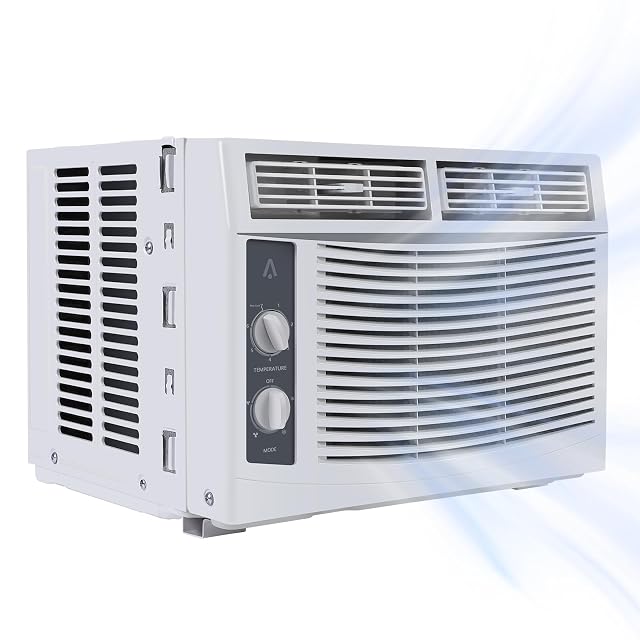
The MilleLoom 5,000 BTU is the lower-capacity, lower-priced option, rated for rooms up to about 14 m (46 ft)² with mechanical dial controls. It runs on 115 V/60 Hz mains, and the seller’s own listing text is inconsistent between markets about which exact model it describes.

The larger, better-equipped unit

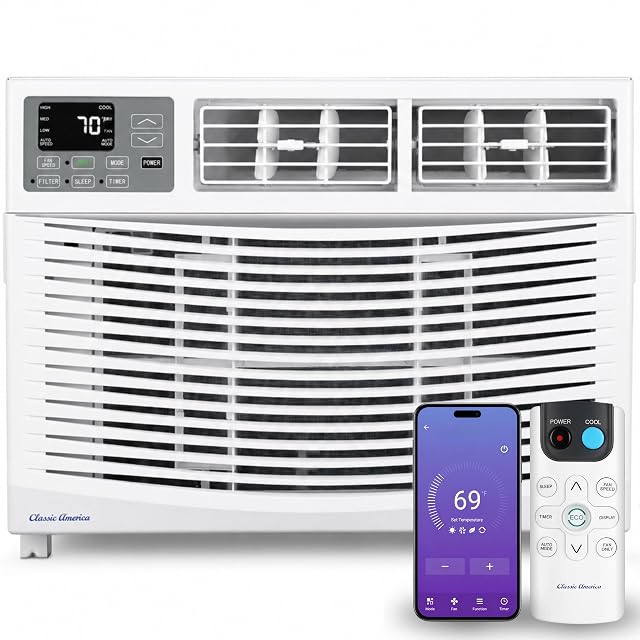
The Vtronix Classic America 8,000 BTU covers a larger room and adds WiFi and Alexa control, at a substantially higher price once European import markup is factored in. It runs on 120 VAC — still a North American spec, not a European one.

What we would not do

Recommend either as a plug-and-play European purchase. Both are genuine, in-stock products, but both are built around North American voltage and window formats first. If a permanent, properly-rated cooling installation is the goal, a European-market portable air conditioner with a European window kit — see our portable air conditioner guide — is very likely the better starting point.

Which unit does your room need?

You have a sash window
That is the format these units are designed for, and the only one where fitting is straightforward.
Your windows are casement or tilt-and-turn
You need a made-to-measure frame or a replacement panel: the unit does not sit in the opening as it comes.
You want the best performance for a given budget
A window unit beats a portable, because the compressor and hot exchanger are outside.
You live in a managed building
Fitting one changes the exterior appearance: it is a question of the building rules before it is a technical question.

Picking by the room you have

Bedroom

With the compressor outside, indoor noise is markedly lower than a portable's. That is the format's main argument.

A single room to cool

One unit, one room, one window. The format is simple and effective as long as you are not trying to treat a whole home.

Office or business premises

Daytime use, closed room, semi-permanent installation. The most favorable case for the format.

Older house

Casement windows and shutters make fitting complicated. That is where the format shows its limits in Europe.

What is worth looking at, and what is not

Compatibility with your windows
The first criterion, and the one that rules out most models outside countries with sash windows. It is checked with a tape measure, before anything else.
Voltage and plug
Many of these units come from markets with a different supply voltage. A unit built for another voltage cannot be used, and an adaptor settles nothing.
Indoor noise
A structural advantage of the format, but it varies a great deal between models depending on how well the casing is insulated.
How well the fitting seals
A badly sealed unit lets in hot air, rain and street noise. The quality of the frame and gaskets decides the result.

Matching the figure to the room

Your windowFeasibilityWhat you need
SashStraightforwardThe supplied kit
SlidingPossibleA filler panel
CasementDifficultA made-to-measure frame
Tilt-and-turnDifficultA panel replacing the opening light

Where buyers go wrong

Buying before measuring
It is the number-one mistake with this format: the unit arrives and will not fit. Opening dimensions are taken before ordering.
Ignoring the supply voltage
A unit designed for another electrical system will not plug in, and no adaptor converts a voltage. It is checked on the rating plate, not in the listing.
Neglecting the support
The unit is heavy and cantilevered. The support and the sill must be rated for it, and the tilt must let condensate run outside.
Forgetting winter
Left in place, the unit is a hole in the insulation. Removing it or insulating it carefully is part of the cycle of use.

By the household you are in

One bedroom to treat
A unit sized to the volume, fitted cleanly, removed at the end of the season.
The home with compatible windows
The format offers the best balance of efficiency, indoor noise and price.
The classic European home
A portable or a fixed split stays more realistic; a window unit there calls for joinery made to measure.

Filters, servicing and working life

A window unit fouls through its filters and through its outdoor exchanger, exposed to leaves and dust. Condensate must always be able to run outside, otherwise it ends up indoors.

  • Clean the filter throughout the season of use.
  • Clear leaves and dust from the outdoor exchanger.
  • Check the tilt and the condensate run after heavy rain.
  • Inspect gaskets and sealing at every seasonal refit.

Safety

A heavy appliance fitted into an opening, with a substantial electrical supply.

  • A mechanical support sized for it: the window alone does not carry the unit.
  • A dedicated socket and a circuit rated for the consumption.
  • A two-person fit, the unit being heavy and awkward.
  • Check the installation does not block an escape route.

The picks, and the reasoning

  1. MilleLoom 5,000 BTU

    5,000 BTU/h · mechanical dial · 115 V/60 Hz

    A basic mechanical window unit rated at 5,000 BTU/h for rooms up to about 14 m (46 ft)². Seven dial-set temperatures, three fan speeds, cool/dehumidify/fan modes, a 24-hour timer and auto-restart, with no app or WiFi. Built to a North American 115 V/60 Hz electrical spec, which matters more than the price tag for anyone ordering it into a European home.

    Best for: A reader who wants the cheapest possible entry point into a window unit and is prepared to sort out a step-down transformer or import wiring themselves — not a plug-and-play pick for a European socket.

    7.2/10

    ≈ $190

  2. Vtronix Classic America TWC-08CRD1-L0U-CA

    8,000 BTU/h · WiFi + Alexa · 120 VAC

    An 8,000 BTU/h window unit with WiFi and Alexa control alongside the physical remote, an eco mode, and a programmable timer, rated for rooms up to about 32 m (105 ft)². Energy Star-listed at 10.9 CEER. Like every window air conditioner we checked in this family, it is built to a North American 120 VAC electrical spec, not the 230 V mains used across the EU and UK.

    Best for: A reader who specifically wants app or voice control on a window unit and is willing to pay a substantial European import markup for a North American product, and to handle the voltage conversion themselves.

    8.4/10

    ≈ $295

The questions that keep coming up

Can either of these be plugged into a standard European socket?

Not directly. Both are specified at North American mains voltage (115–120 V), not the 230 V used across the EU and UK. Running either here means sourcing a suitable step-down transformer, and a 60 Hz-rated motor is not guaranteed to run correctly on a 50 Hz supply.

Will either fit a tilt-and-turn or casement window?

Not as supplied. Both installation kits are built for a North American double-hung sash window that slides vertically. Most European windows tilt, turn or crank outward, so fitting either typically means a permanent frame insert or a wall-sleeve alternative rather than the kit in the box.

Is it more effective than a portable?

Yes, at comparable capacity: the compressor and hot exchanger are outside, there is no hose radiating into the room and no negative pressure drawing hot air in.

Can I fit it myself?

On a sash window, yes, with two people. On European joinery, the adaptation is carpentry work and is planned before buying.

Is it noisy for the neighbors?

Most of the noise goes outside, which is comfortable indoors and less so for whoever is opposite. It is worth considering in dense housing.

Should I remove it in winter?

Preferably: left in place it is a thermal bridge and an air leak. Failing that, an insulating cover limits the damage.

What about the condensate?

It must run outside, which a slight tilt at fitting guarantees. Water coming back indoors means the fit is too level or the drain is blocked.

Do these units exist in 230 volts?

Some do, others are built for other electrical systems. It is the first thing to check on the rating plate before ordering anything.

Each unit, and the room it suits

MilleLoom 5,000 BTU · $190

Suits: A reader who wants the cheapest possible entry point into a window unit and is prepared to sort out a step-down transformer or import wiring themselves — not a plug-and-play pick for a European socket.

Strongest point: Simple mechanical dial control — nothing to pair, register, or update

Weakest point: Runs on 115 V / 60 Hz, the North American mains standard, not the 230 V / 50 Hz used across the EU and UK — see the FAQ before ordering

Read the full review →

Vtronix Classic America TWC-08CRD1-L0U-CA · $295

Suits: A reader who specifically wants app or voice control on a window unit and is willing to pay a substantial European import markup for a North American product, and to handle the voltage conversion themselves.

Strongest point: WiFi and Alexa control in addition to the physical remote, which the entry-level pick in this family does not offer

Weakest point: 120 VAC, the North American mains standard — the same voltage mismatch as every other unit in this niche, see the FAQ before ordering into the EU

Read the full review →

What your money buys at each level

What to buy alongside

Filters and spares from the same aisle, at the price we read. Confirm the fit against the unit you pick before ordering: it turns on the size and the part number, both of which the product page gives.

Short, before the detail

Where these numbers come from

The units on this page are drawn from the catalog of this site. Figures are the ones the maker publishes and the ones on the Amazon listing; prices are what Keepa recorded on the date shown, and neither stands still. The order follows declared figures, the weight of stated strengths against stated limits, and price. Nothing on this site has been run in person, and no page here pretends otherwise.

Last checked on

Prices quoted in these summaries are dated readings. The live price is shown next to each product.

The tool we use ourselves

Chosen your tool? Now buy it at the right price.

Portable air conditioners and dehumidifiers swing by fifty dollars or more across the year, and the biggest "discounts" often land at prices the same model sold for six weeks earlier. UniverTrack tracks the real price history across retailers, spots fake reductions, and alerts you when it is genuinely the moment to buy.

Real price historyBuy-now alertsAI buying assistant
Try free for 14 days →
No commitment · Cancel in one click · 5 languages